German Beer Culture in Munich: 25 Legendary Beer Halls, Biergartens & Breweries
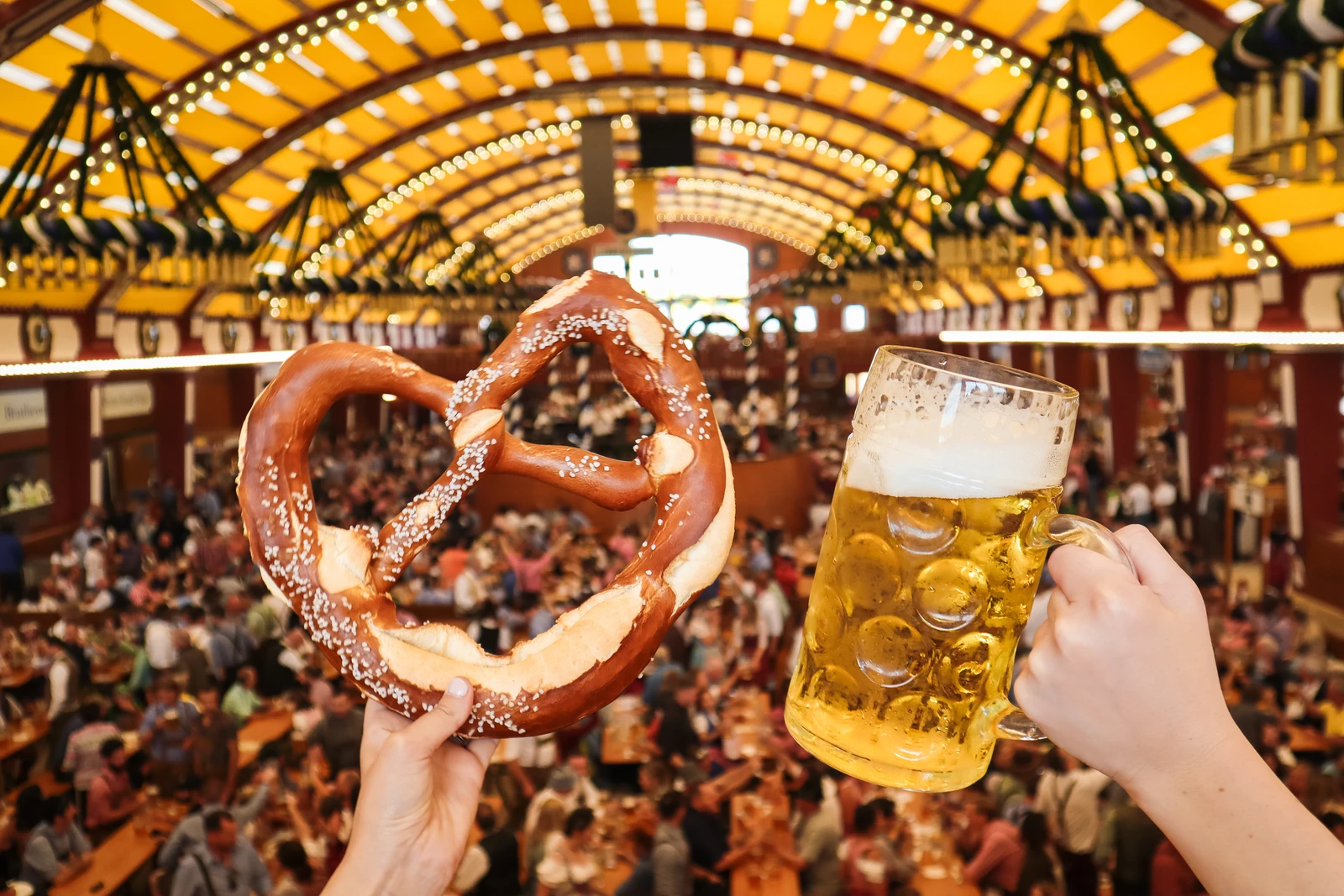
A guide to Munich beer culture, from centuries-old beer halls and traditional Bavarian taverns to giant beer gardens and modern craft breweries
Contents
A Short History of Munich Beer Culture
Munich's brewing tradition stretches back to the Middle Ages. Augustiner traces its brewery history to 1328, when monks at the Augustinian monastery were already brewing beer, while Hofbräuhaus was founded in 1589 by Duke Wilhelm V to supply the Bavarian court. Over time, beer moved from monasteries and royal breweries into public taverns and eventually into the distinctive Munich Biergarten culture. Deep beer cellars were used to keep beer cool during summer, and chestnut trees were planted above them to provide shade. In 1812, King Maximilian I allowed breweries to serve beer above their cellars, helping create the social institution that became the Munich beer garden. The city's beer history is also closely connected with Oktoberfest, which began in 1810 after the wedding of Crown Prince Ludwig and Princess Therese.
Hofbräuhaus München
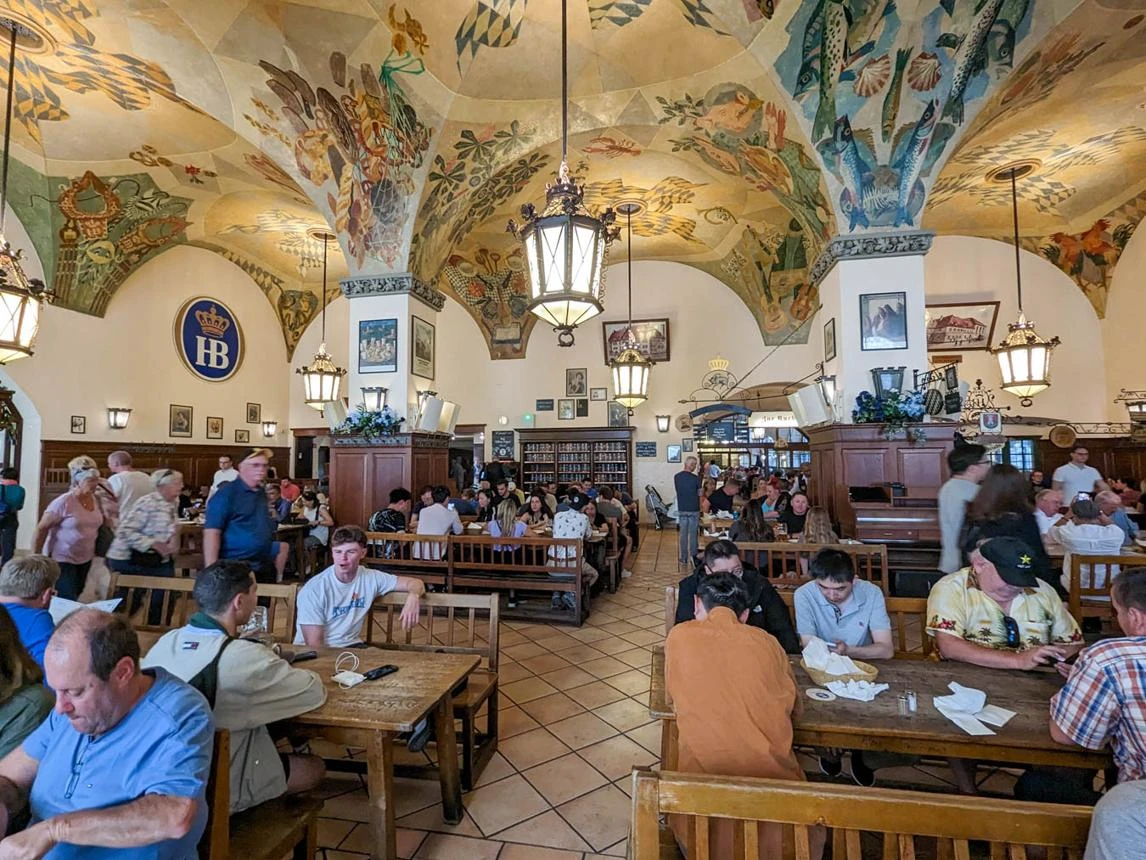
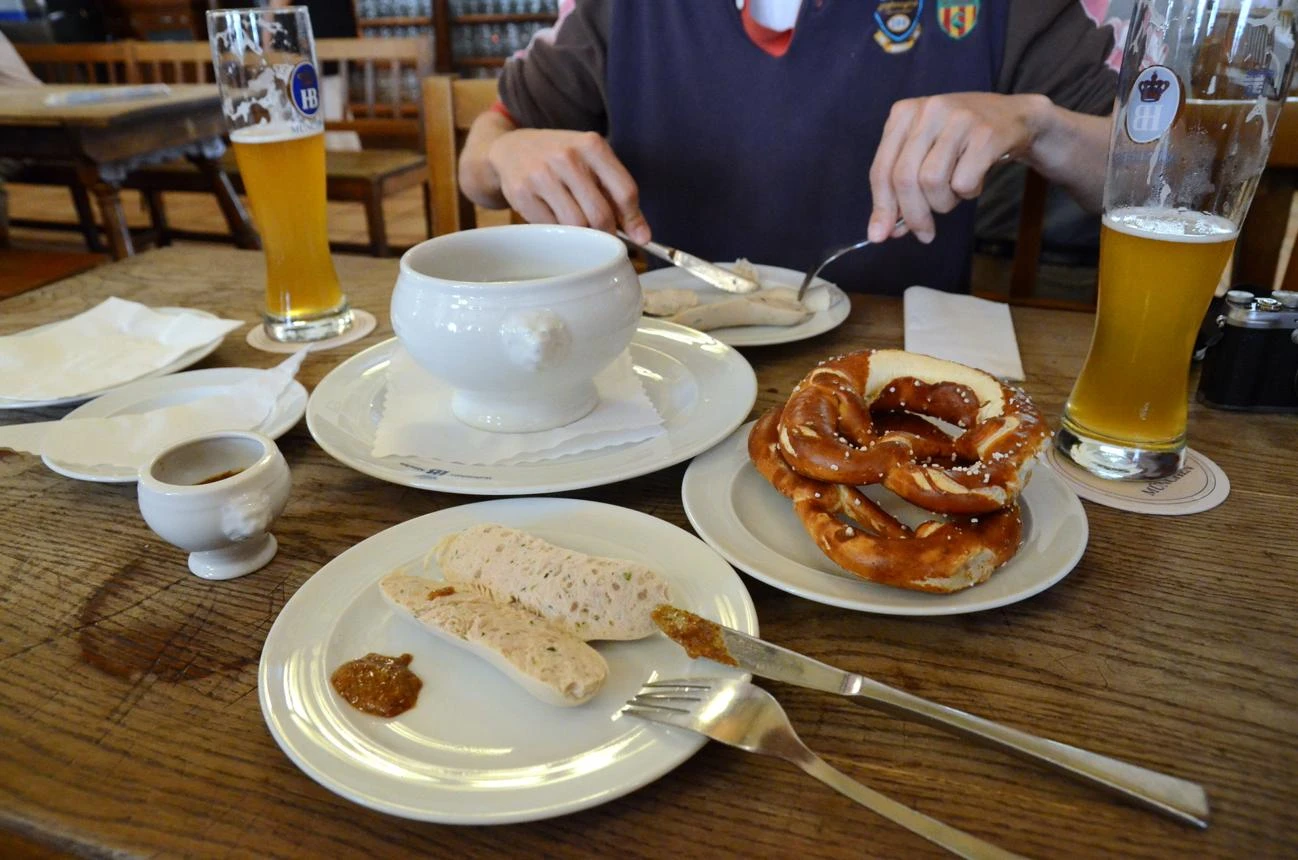
Hofbräuhaus is probably the most internationally recognizable symbol of Munich beer culture, but its history is considerably older than its tourist reputation. It was founded in 1589 by Duke Wilhelm V as a brewery intended to supply the Bavarian court, and King Ludwig I opened the establishment to the public in 1828. The present beer hall emerged after major rebuilding in the late nineteenth century, while the brewery itself eventually moved away from the city centre. Today the Platzl building combines Hofbräu beer, Bavarian food, traditional music and long communal tables, making it a theatrical introduction to Munich's Wirtshaus culture. The house also maintains Stammtisch traditions and serves several Hofbräu beers, including Original, Dunkel and Weisse.
Augustiner-Großgaststätte
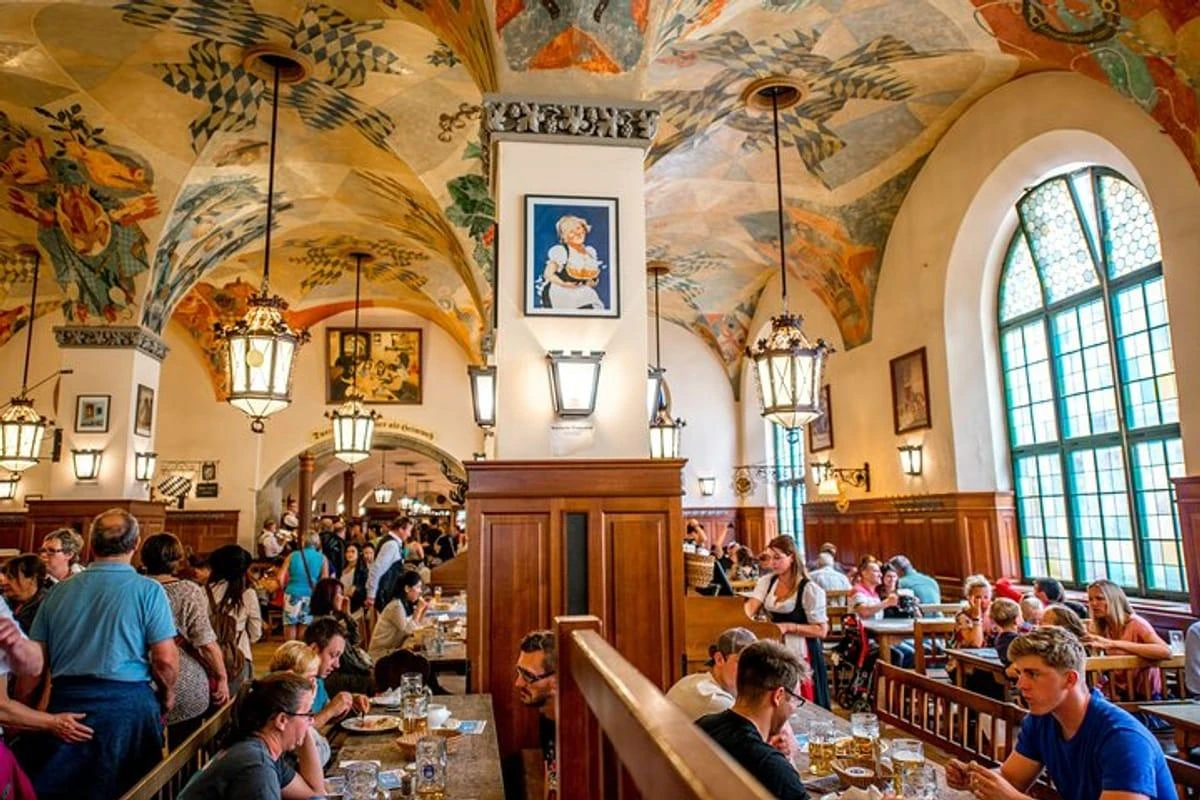
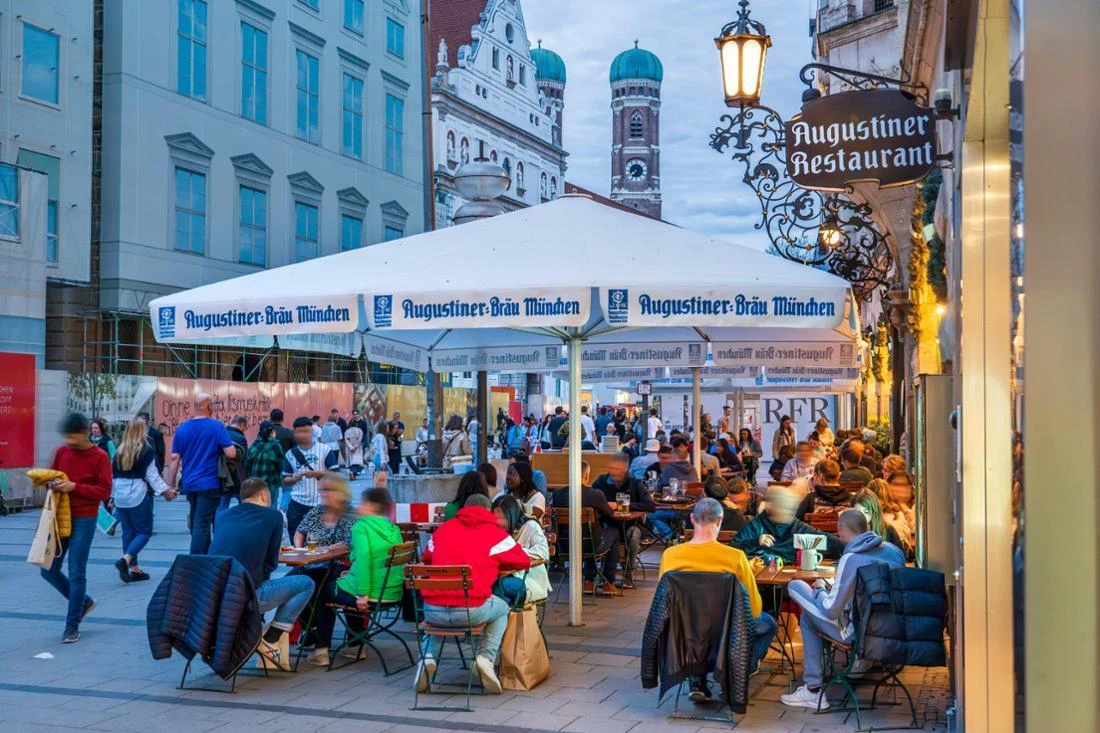
Augustiner-Großgaststätte is one of the places to visit when you want to understand the older, more traditional side of Munich beer culture. The building on Neuhauser Straße developed from the historic Augustiner brewery complex, whose origins go back to the monastery brewery documented in 1328. The present beer-serving building was created between 1895 and 1897 under architect Emanuel von Seidl, whose work included the distinctive Muschelsaal. The restaurant therefore combines nineteenth-century Munich architecture with the city's oldest surviving brewery tradition. Its large halls, traditional interiors and central pedestrian-zone location make it a natural place to experience Augustiner beer in an unmistakably Munich setting.
Augustiner am Platzl
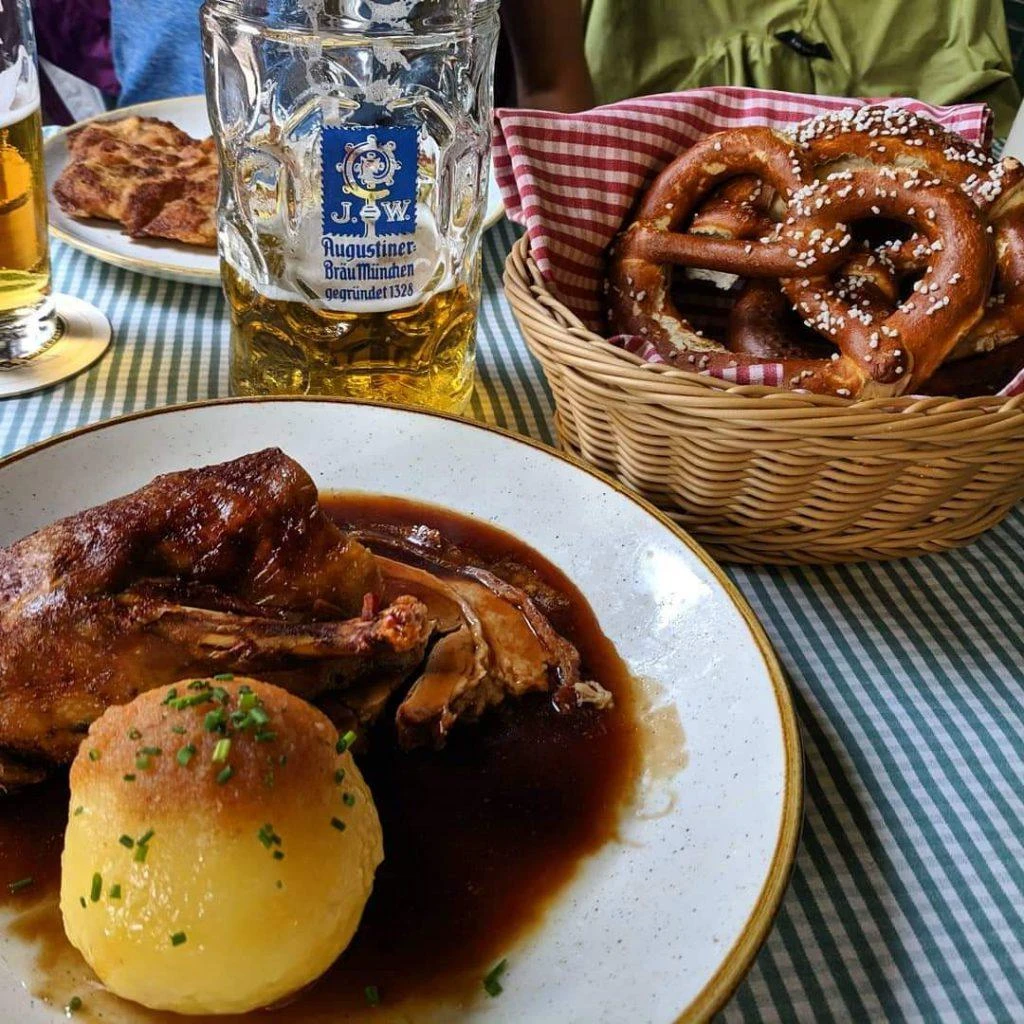
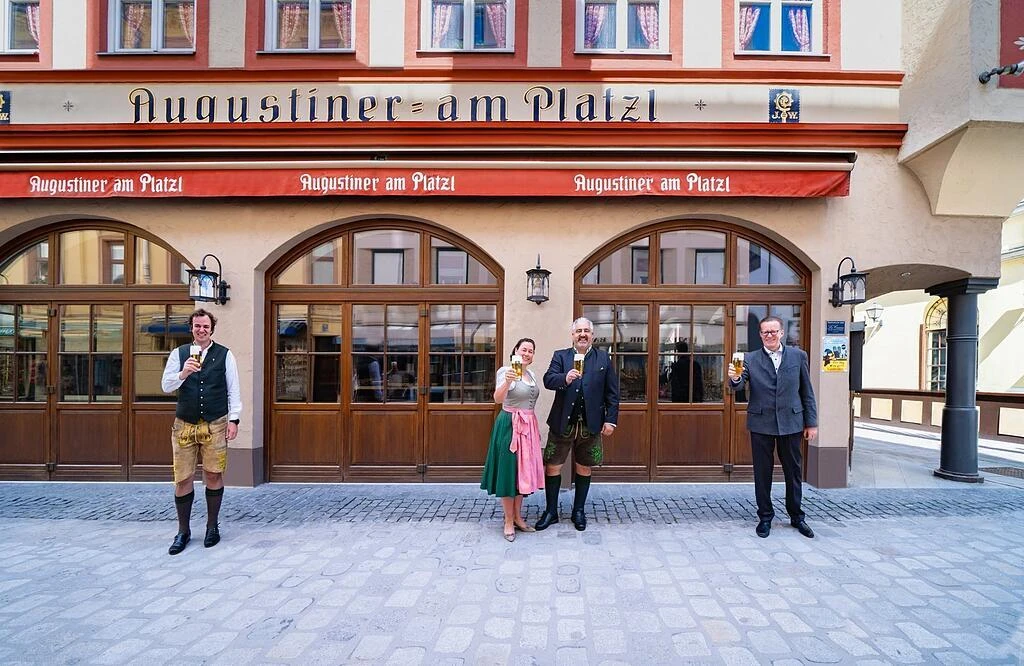
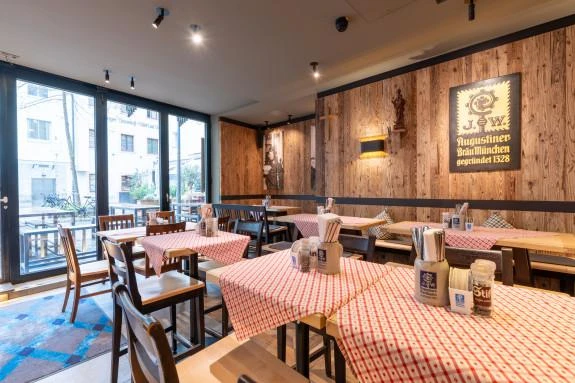
Augustiner am Platzl sits close to Hofbräuhaus in the heart of Munich's old town, but it represents a very different brewery tradition. Augustiner traces its origins to the Augustinian monastery and is officially regarded as Munich's oldest brewery, with brewing documented as early as 1328. After secularisation and several changes of location, the brewery eventually moved to Landsbergerstraße, while its historic drinking traditions remained deeply connected to the city centre. At Augustiner am Platzl, the focus is on classic Bavarian hospitality, traditional dishes and the brewery's characteristic beers. Its location makes it particularly atmospheric in the evening, when the surrounding old-town streets fill with visitors and locals.
Augustiner Klosterwirt
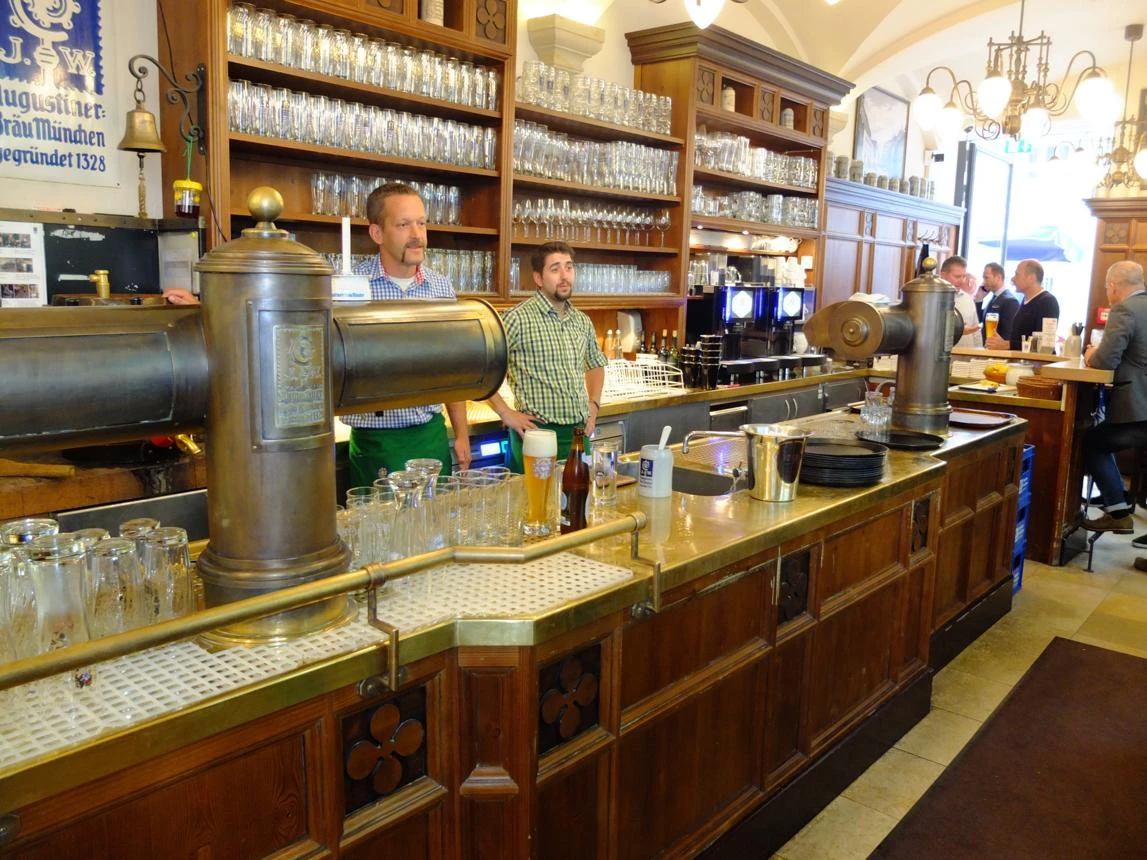
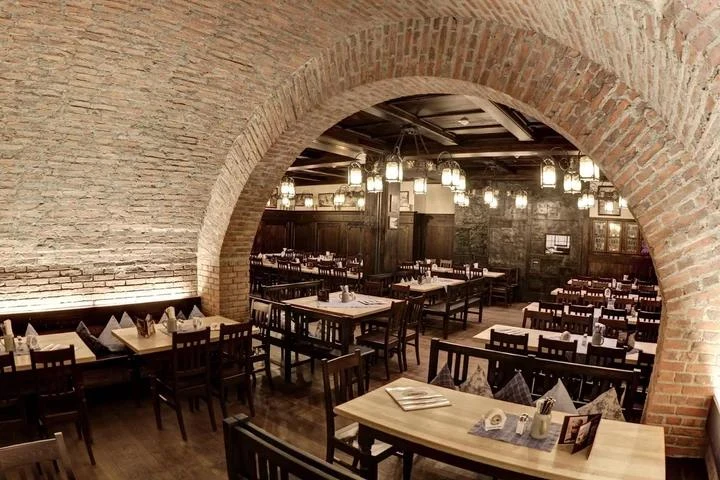
Augustiner Klosterwirt is closely connected with Munich's medieval religious and brewing history. Located beside the Frauenkirche, the restaurant occupies one of the city's most historic central settings and continues the tradition of combining Augustiner beer with Bavarian Wirtshaus cuisine. Its name recalls the Augustinian monks whose monastery played an important role in the origins of Munich's oldest brewery. The atmosphere is more intimate than the enormous Hofbräuhaus, making the Klosterwirt interesting for visitors who want traditional Munich beer culture without the scale of a giant beer hall. The combination of historic surroundings, classic food and Augustiner beer makes this one of the most characterful stops in the old town.
Schneider Bräuhaus
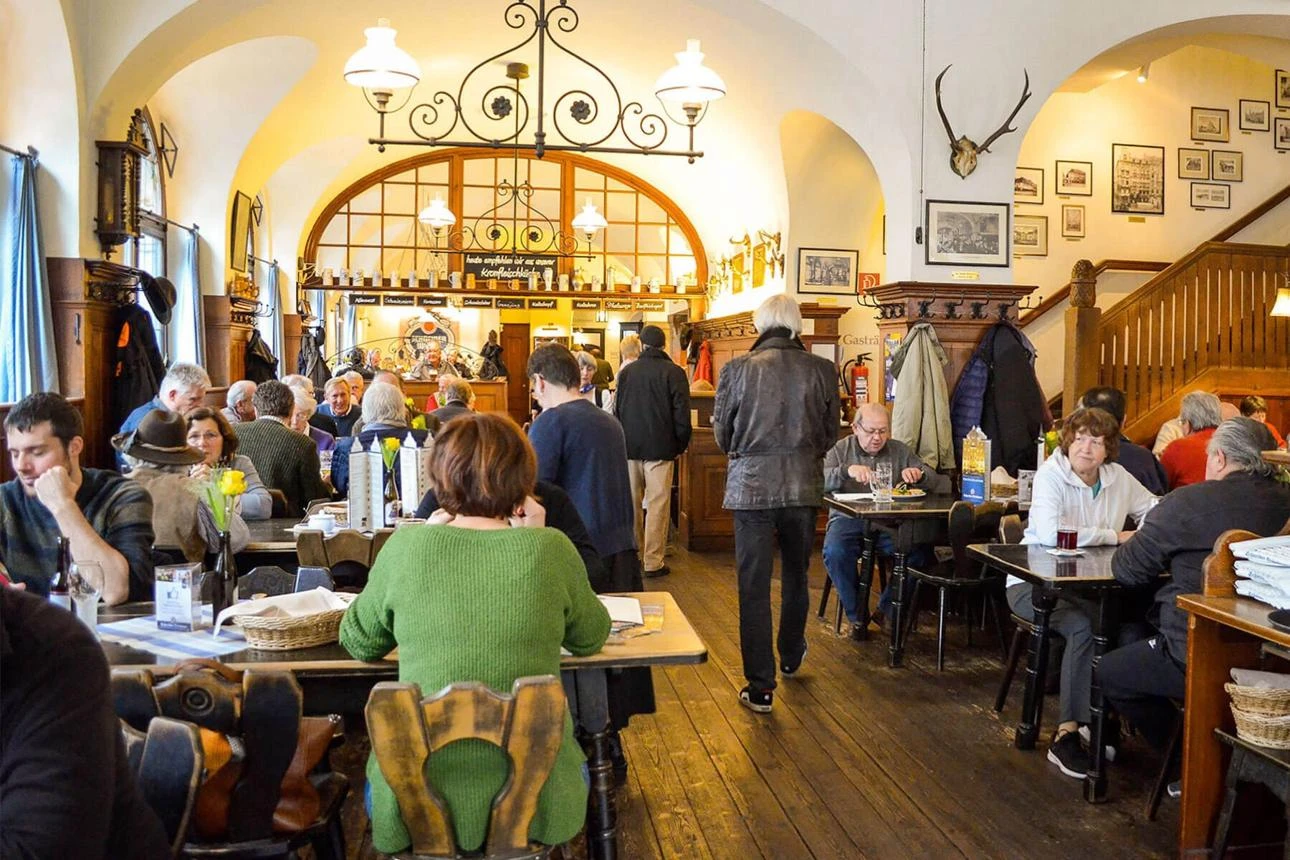
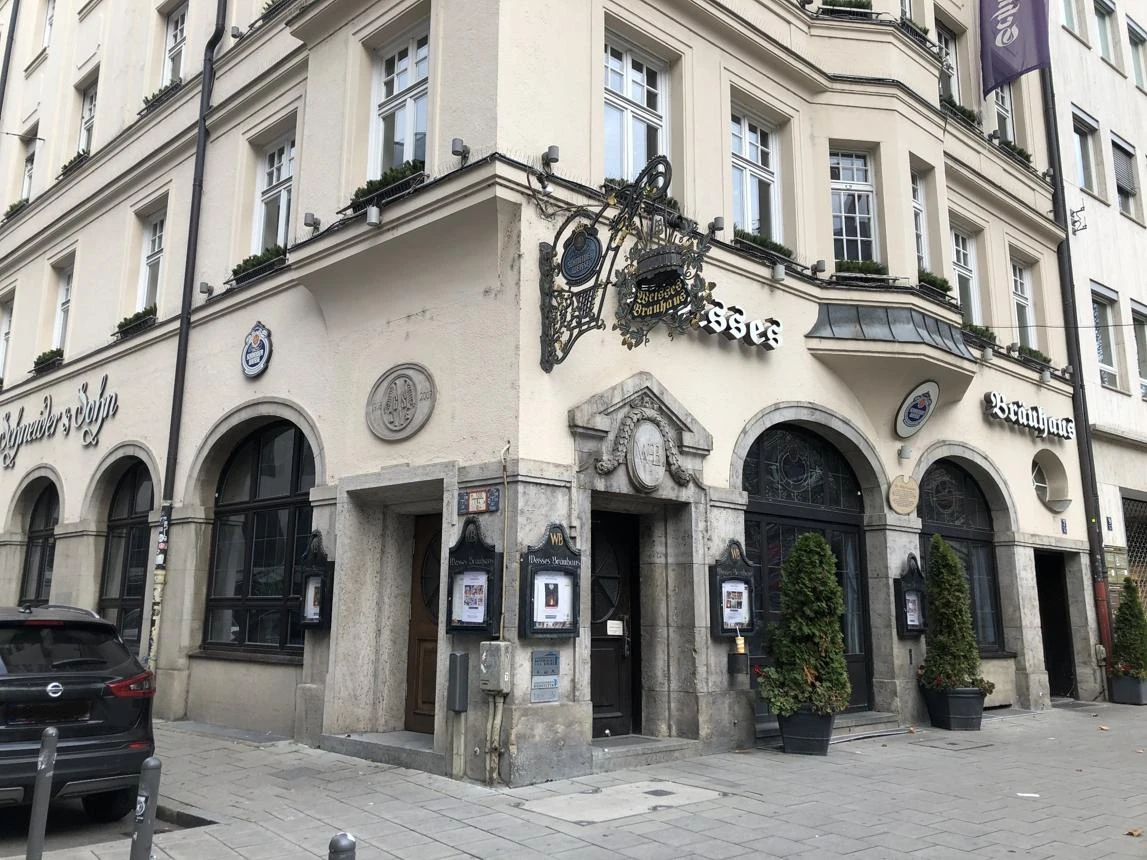
Schneider Bräuhaus is one of Munich's essential addresses for anyone interested in Weißbier rather than focusing only on the city's famous Helles. The establishment is associated with Schneider Weisse, a brewery whose identity is built around Bavarian wheat beer and a long brewing tradition. Inside, the atmosphere follows the classic Munich Wirtshaus model, with wooden tables, traditional Bavarian dishes and a distinctly local character. The beer list makes the place especially interesting because wheat beer appears in several interpretations rather than as a single standard drink. For visitors exploring Munich's beer culture, Schneider Bräuhaus provides a useful reminder that Bavarian brewing is not limited to pale lager.
Andechser am Dom
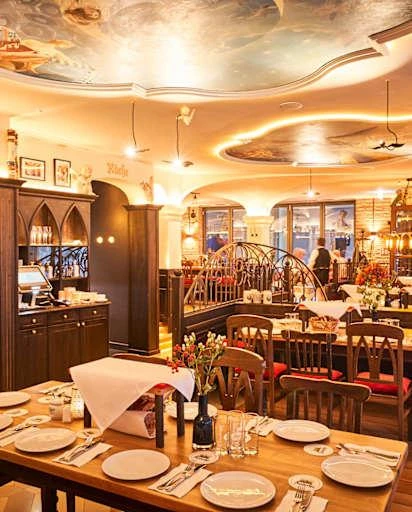
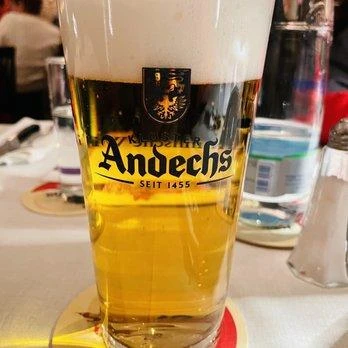
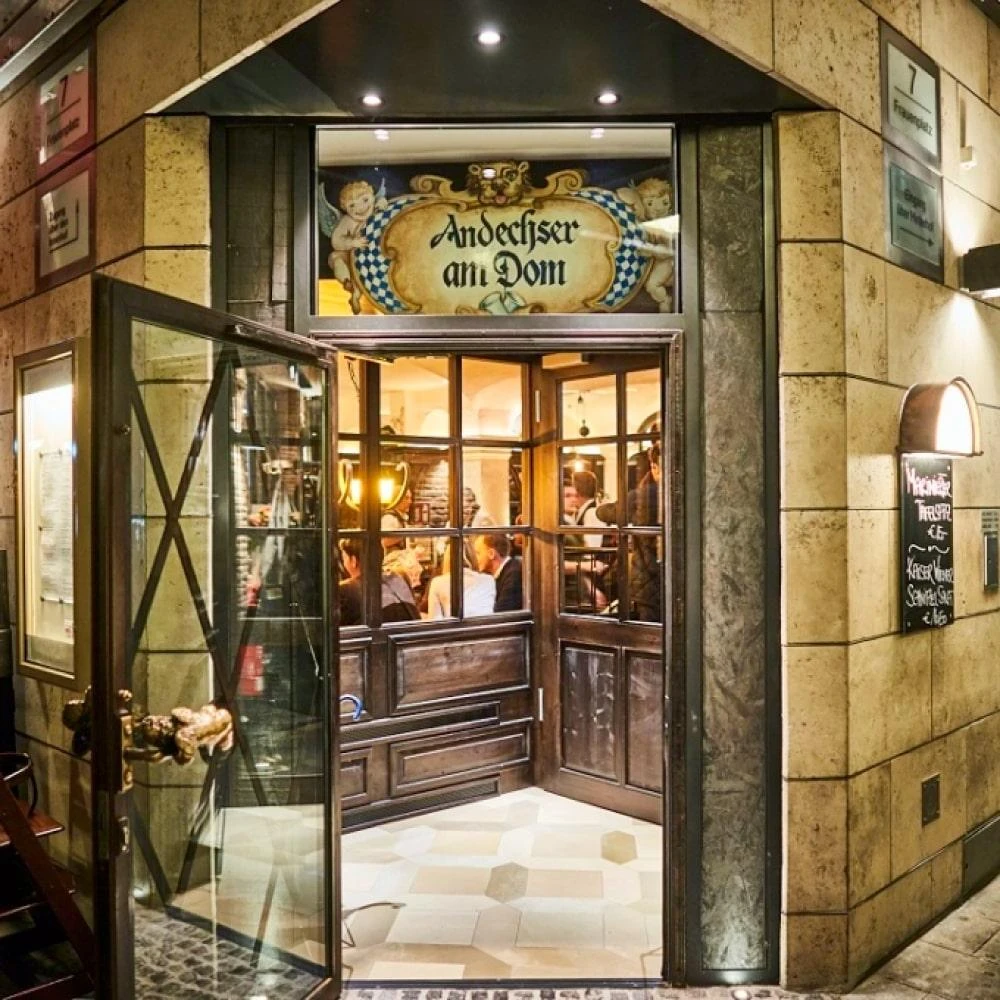
Andechser am Dom brings the monastic side of Bavarian beer culture directly into Munich's historic centre. The restaurant is associated with Kloster Andechs, the Benedictine monastery south of Munich that has become famous for its beers and pilgrimage tradition. Its position near the Frauenkirche gives the restaurant an unusually central setting, while the menu focuses on hearty Bavarian cuisine designed to accompany the monastery's range of beers. This makes it different from establishments centred exclusively on Munich's city breweries: here the connection is between monastery brewing, pilgrimage culture and Bavarian hospitality. It is particularly interesting for visitors who want to explore the religious roots behind much of southern Germany's brewing history.
Spatenhaus an der Oper
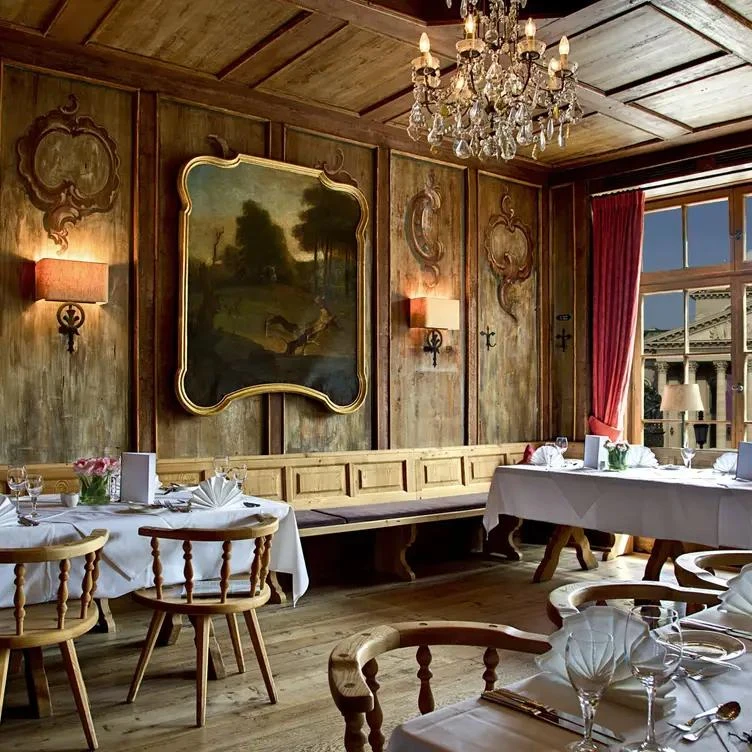
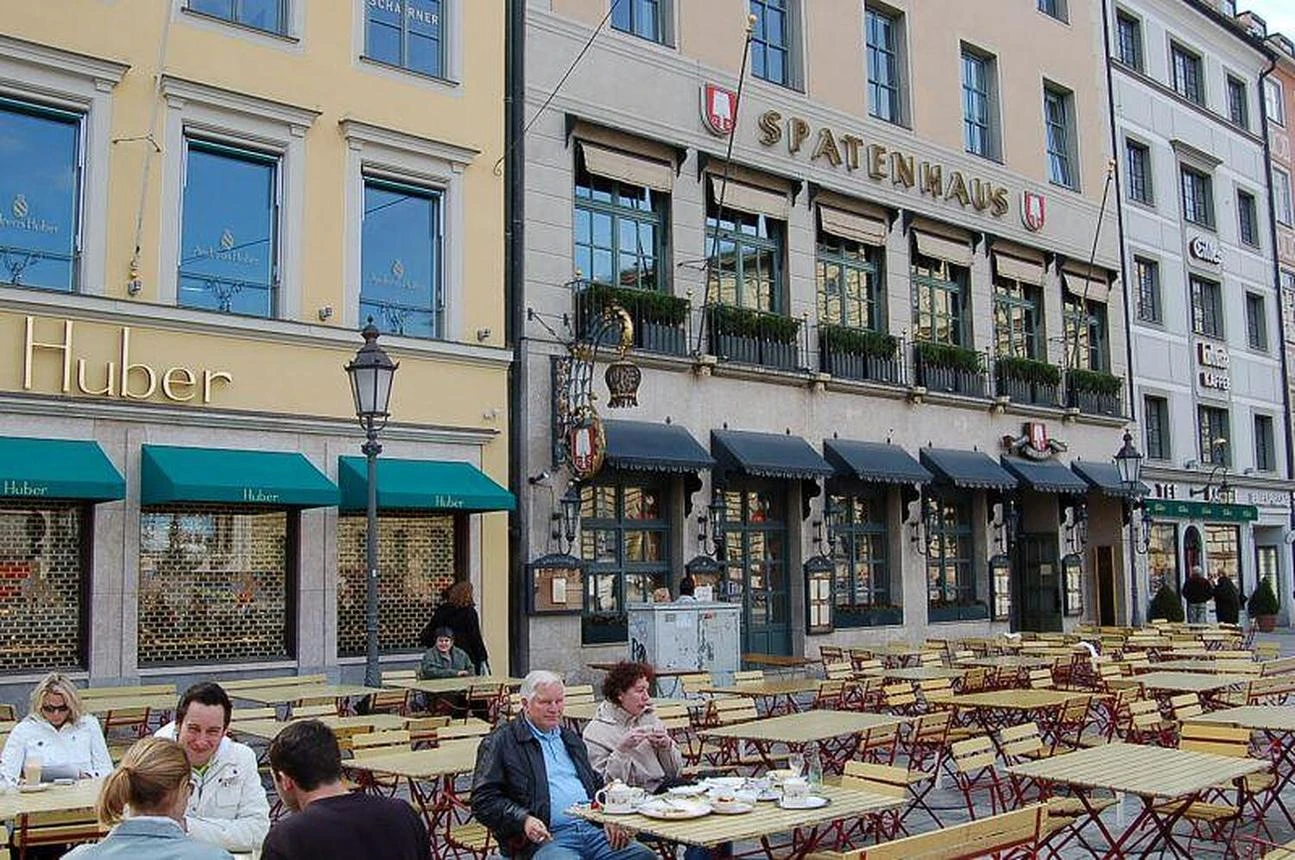
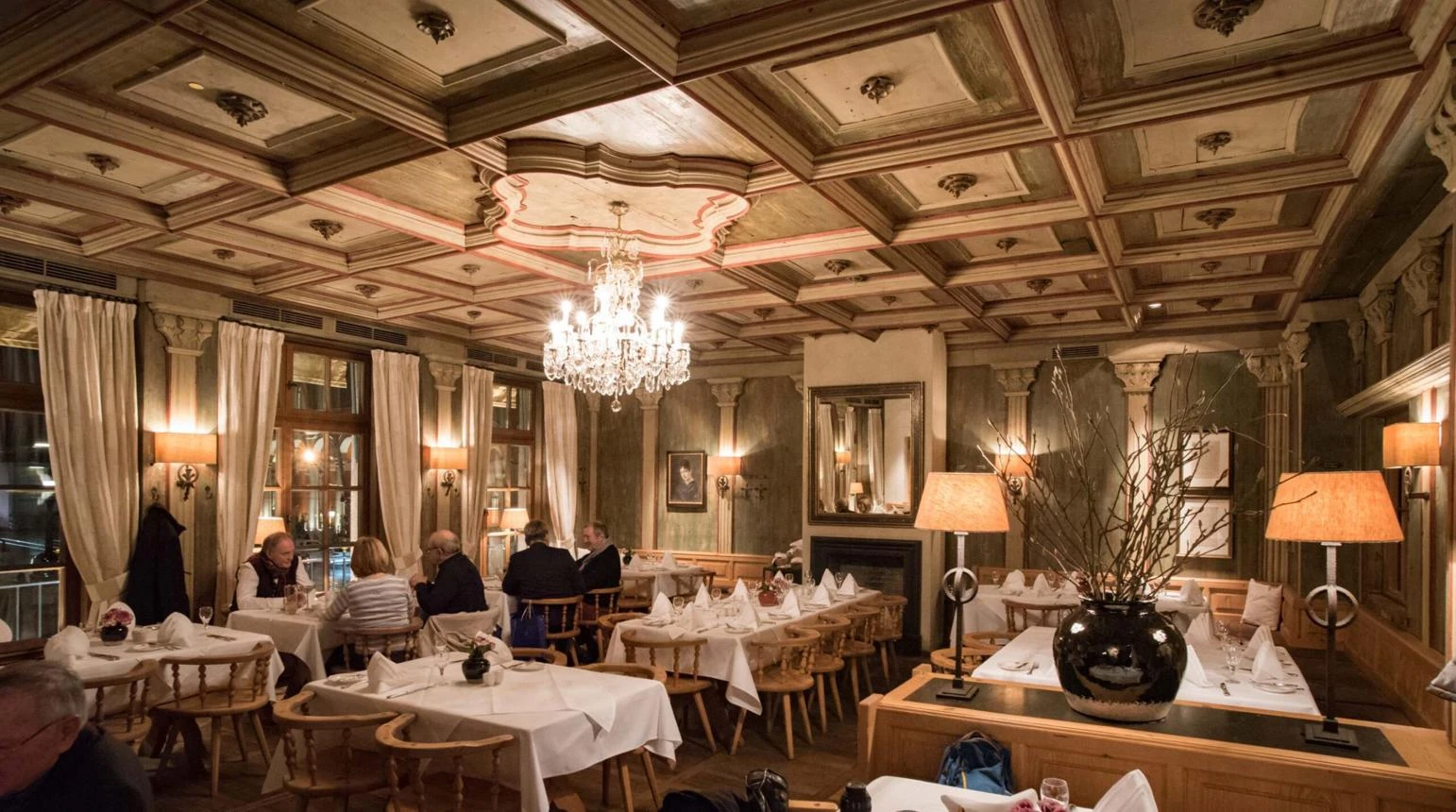
Spatenhaus an der Oper occupies an elegant position directly beside the Bavarian State Opera, giving it a more polished atmosphere than many traditional Munich beer halls. The restaurant is connected with the Spaten brewery, one of the historic names of Munich brewing, and combines beer culture with classic Bavarian dining. Its location near Max-Joseph-Platz means that the architectural surroundings are almost as important as the food and beer: the opera house, Residenz and old-town streets create a distinctly grand Munich backdrop. Spatenhaus works especially well for visitors who want traditional Bavarian cuisine and local beer but prefer an elegant restaurant environment rather than a huge communal beer hall.
Löwenbräukeller
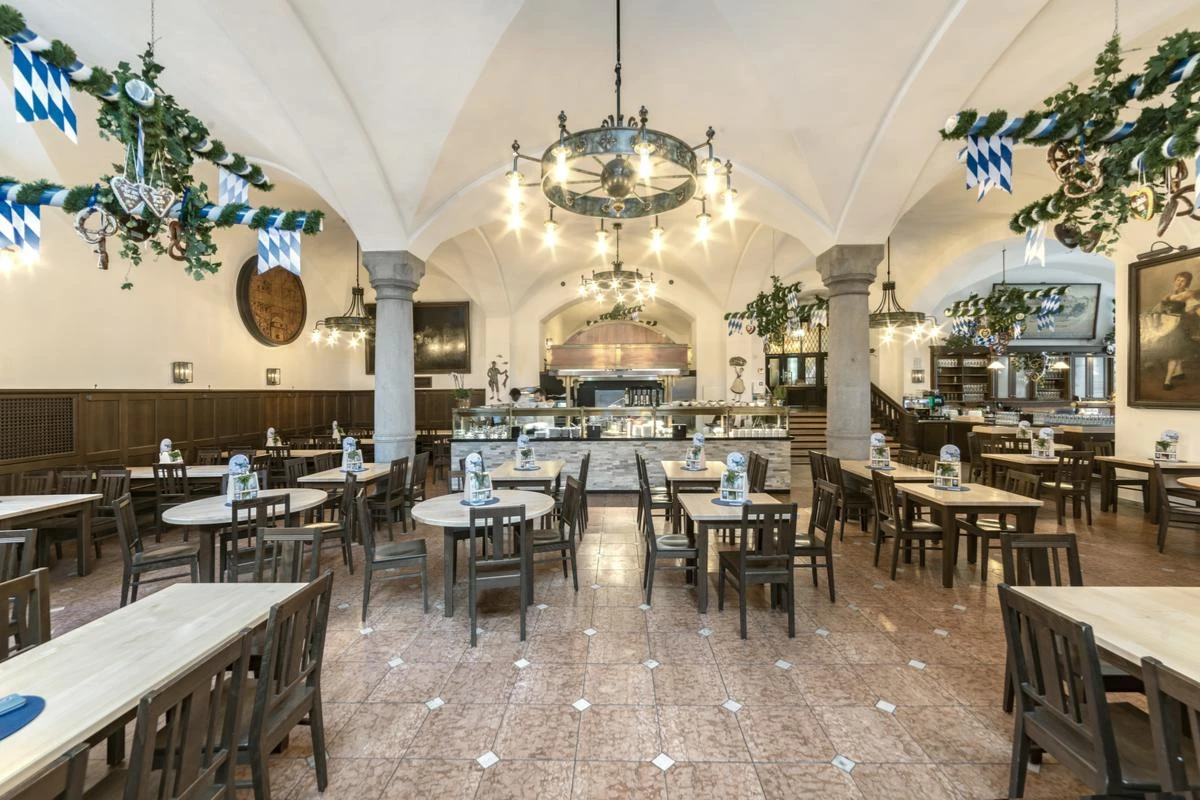
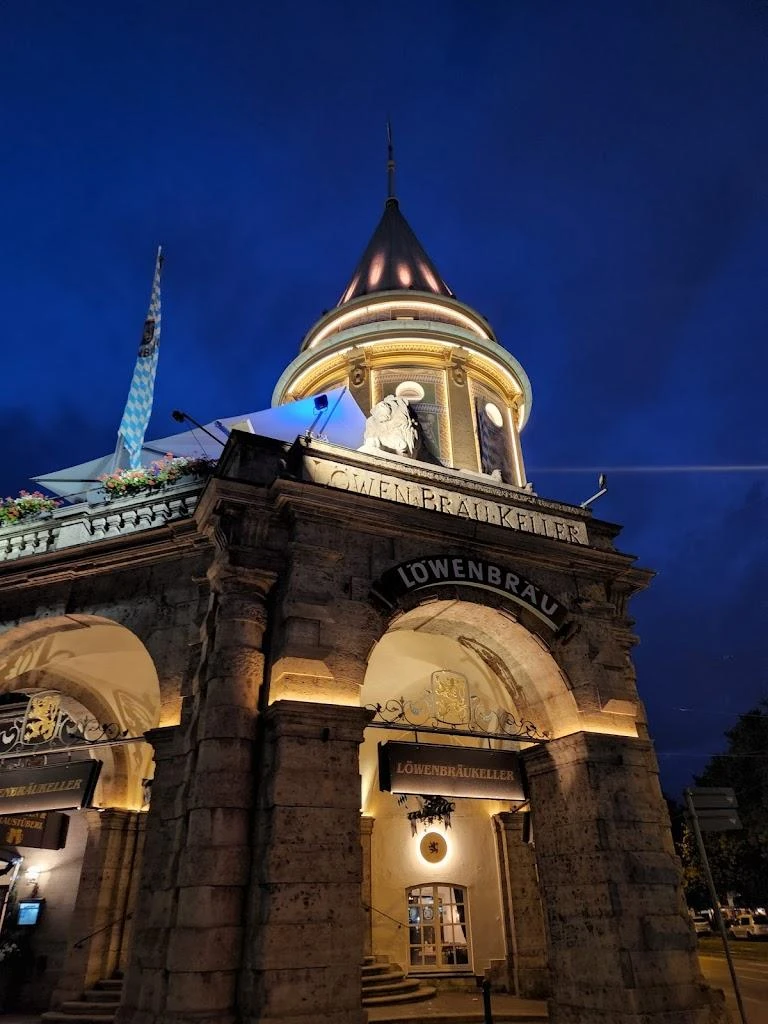
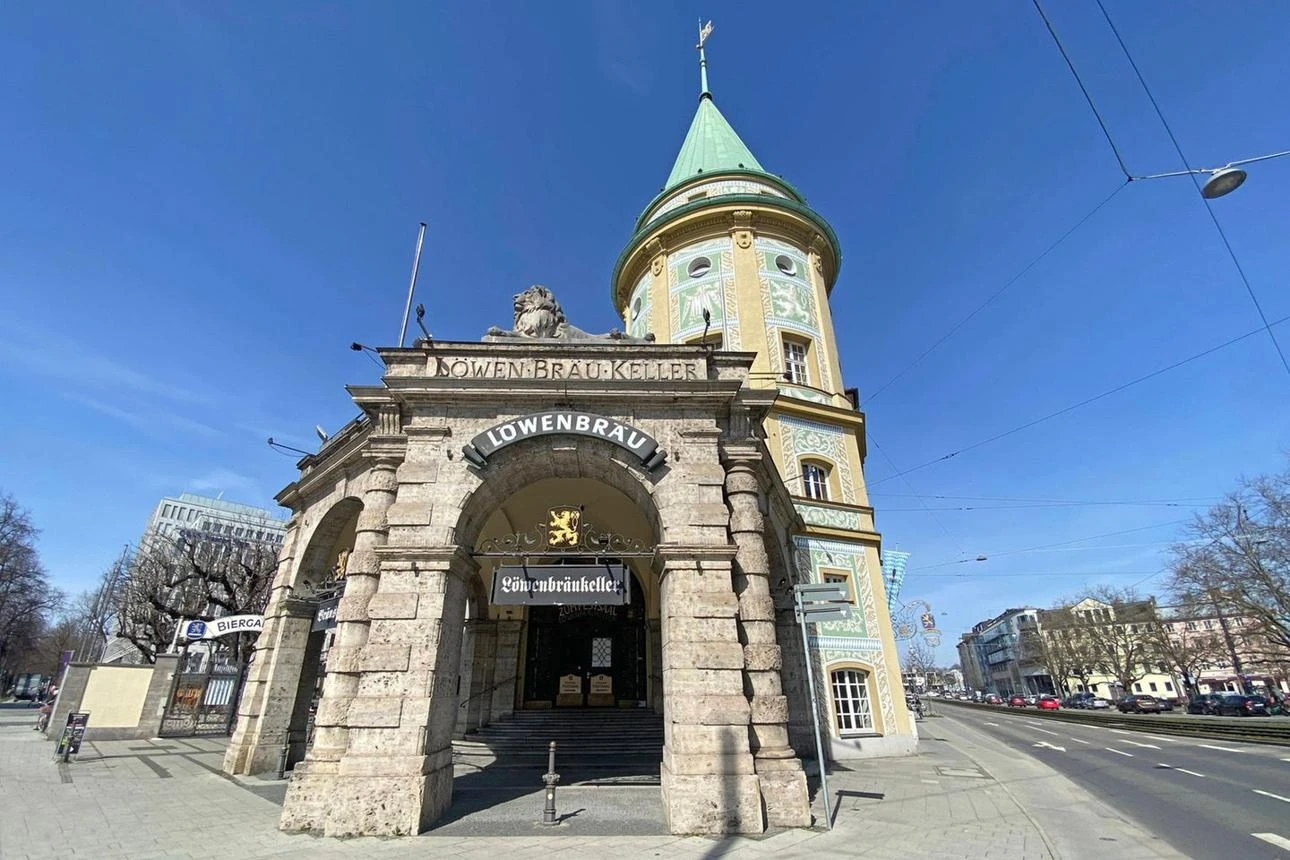
Löwenbräukeller is one of Munich's historic brewery establishments and has long been associated with the Löwenbräu name. Located on Nymphenburger Straße, the complex combines a traditional beer hall, restaurant spaces and a beer garden, creating a setting that works both for everyday drinking and larger celebrations. Its large-scale architecture reflects the nineteenth-century development of Munich's brewery culture, when breweries increasingly created impressive public halls rather than simply selling beer from small taverns. The Löwenbräukeller is also strongly connected with Munich's festival culture, making it an interesting stop for visitors who want to see how brewery traditions developed into the enormous public celebrations associated with the city.
Paulaner am Nockherberg
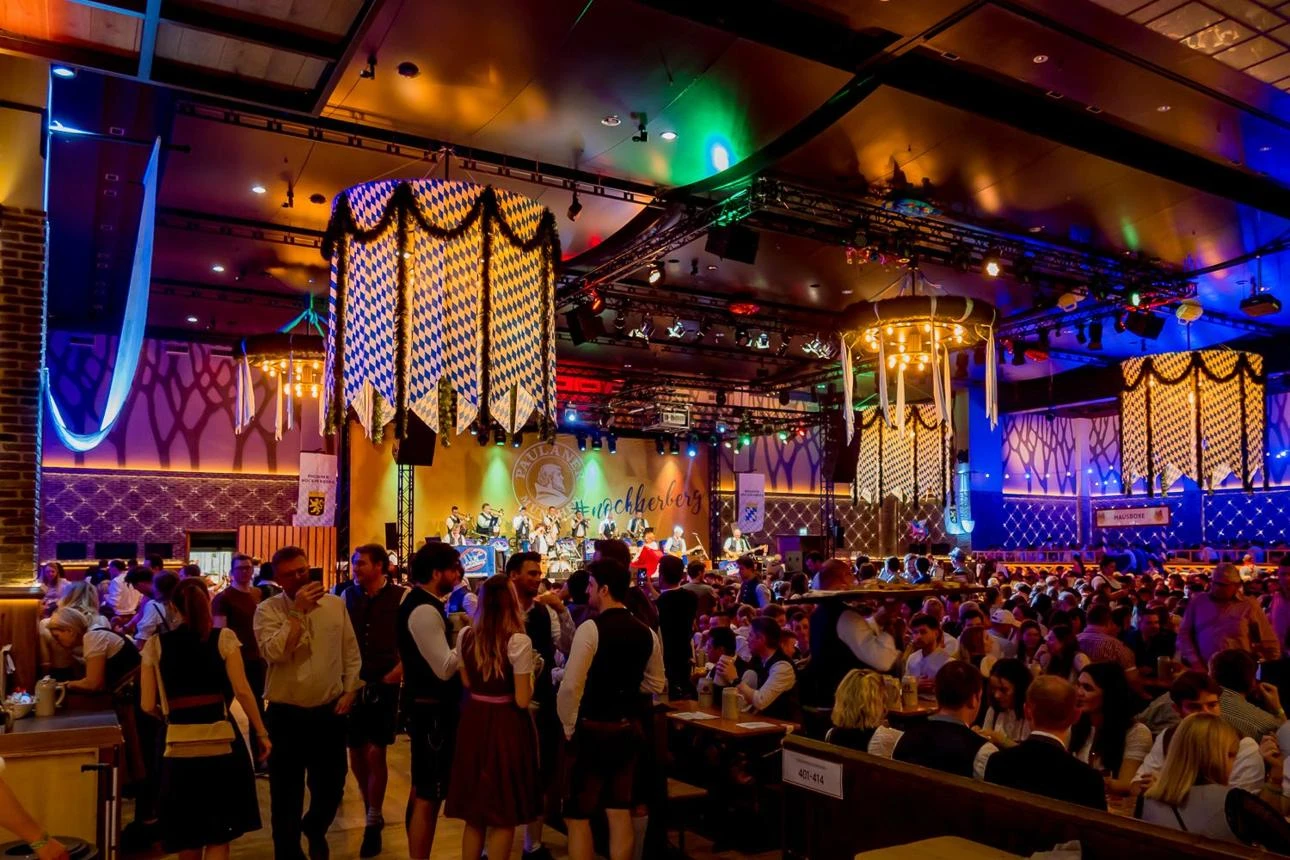
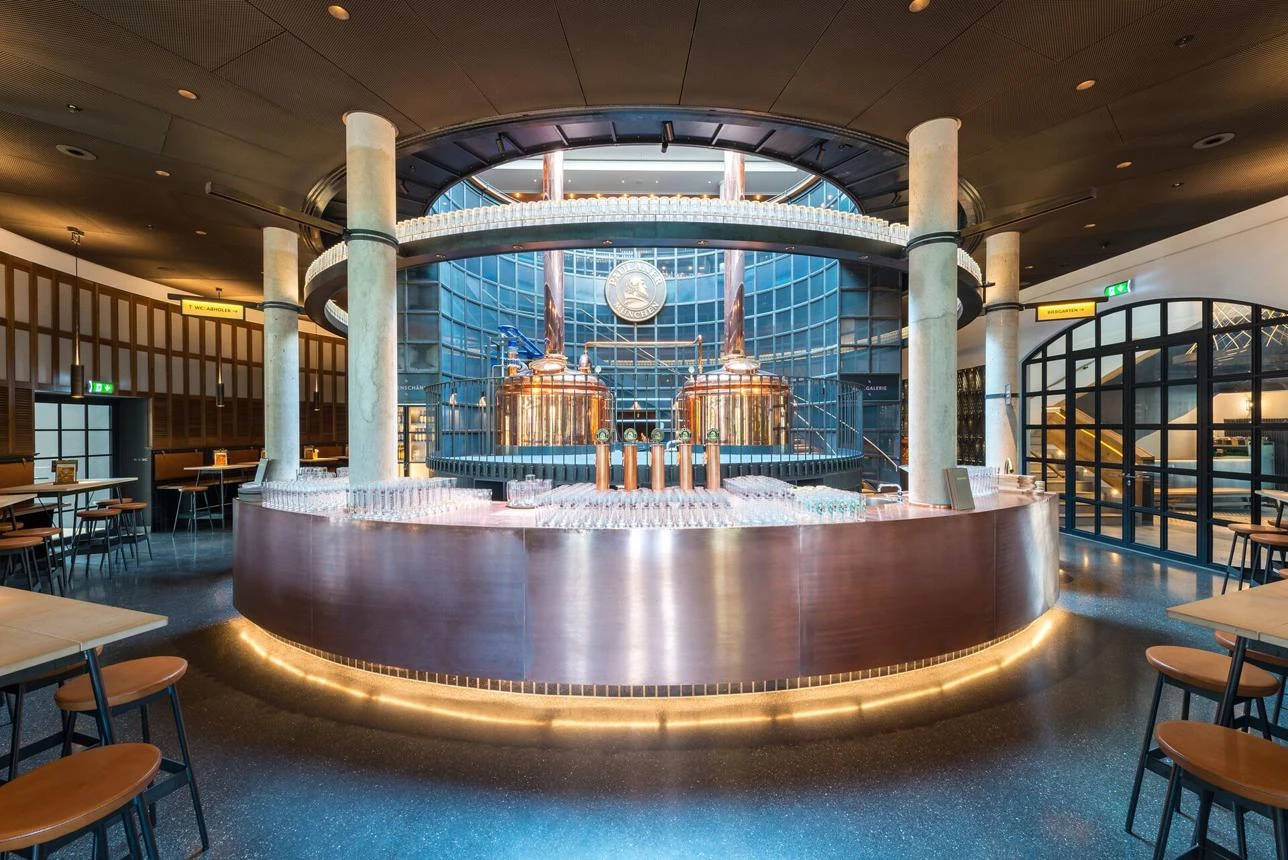
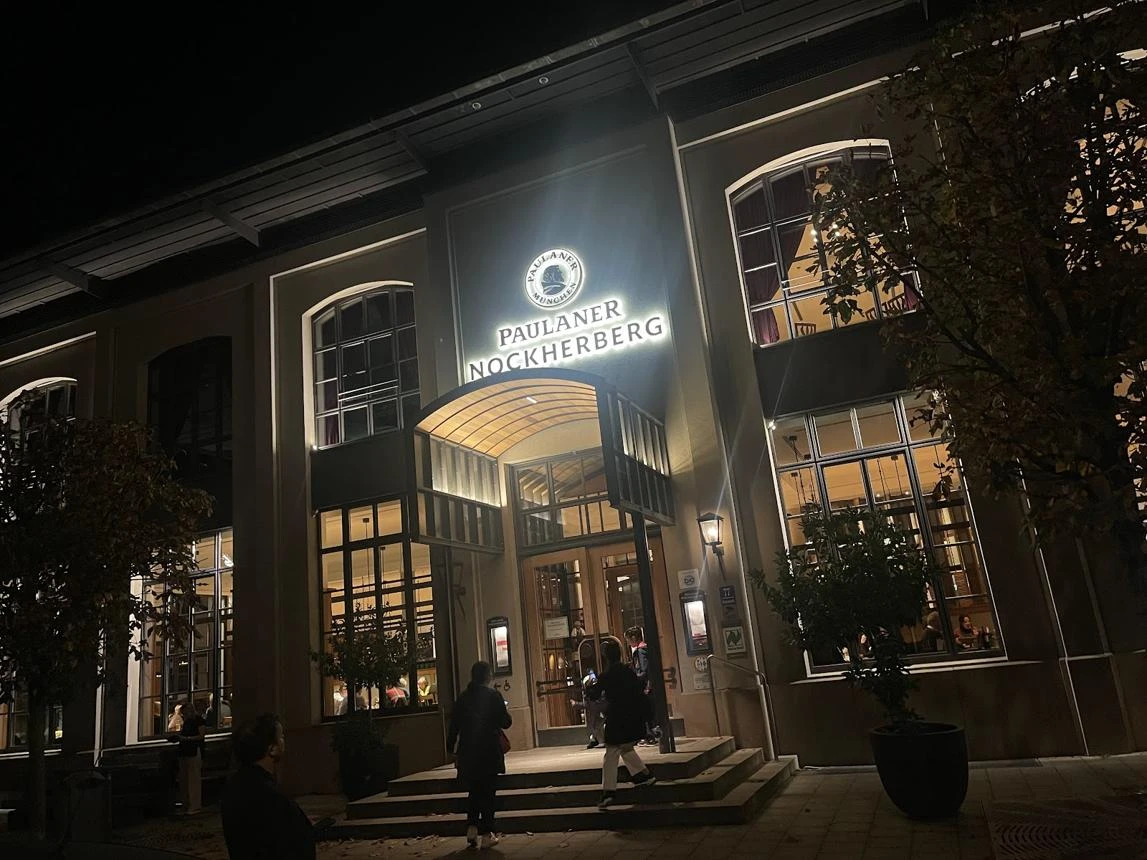
Paulaner am Nockherberg is one of the key addresses for understanding the relationship between Munich beer, brewery traditions and large public gatherings. Paulaner has deep roots in the city, while Nockherberg became famous for its brewery and for the strong beer tradition associated with the annual Starkbierfest. The restaurant and beer garden combine a large-scale Bavarian setting with classic Paulaner beers and traditional food. The location also gives visitors a different perspective on Munich because it lies away from the central tourist cluster around Marienplatz. It is particularly atmospheric during the warmer months, when the outdoor area becomes a classic Munich beer garden filled with long communal tables.
Hofbräukeller
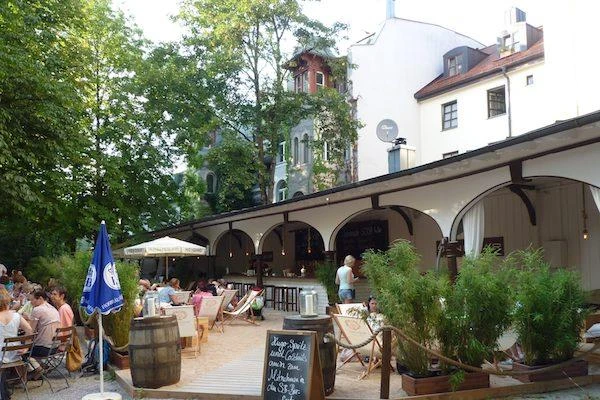
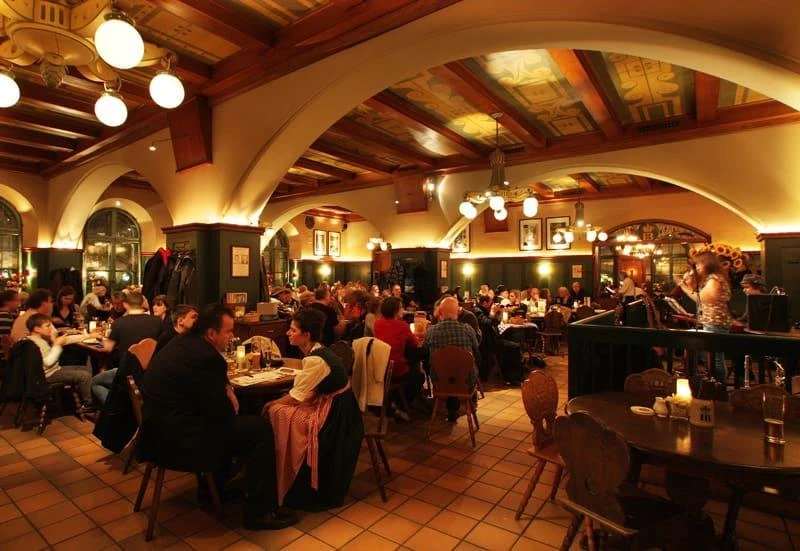
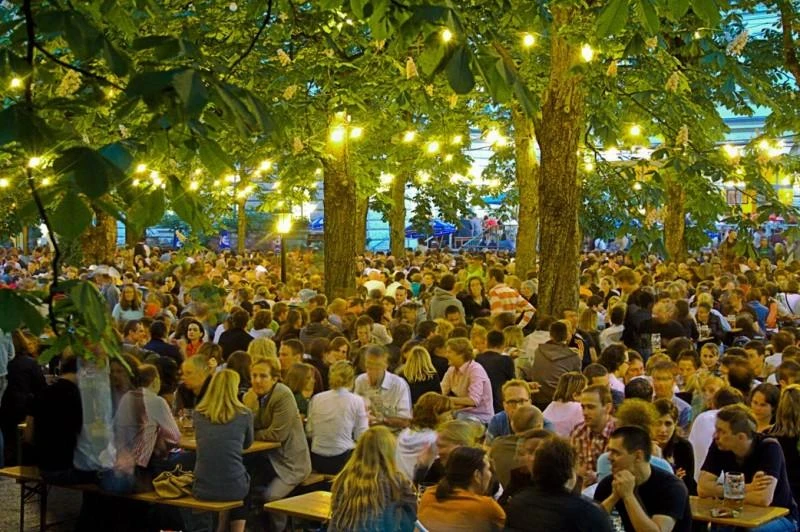
Hofbräukeller at Wiener Platz is historically connected to the Hofbräu brewery but should not be confused with the famous Hofbräuhaus at Platzl. The brewery moved production to this area as the original Hofbräuhaus became too small, and the present Neo-Renaissance building was constructed between 1892 and 1894. Its position on the right bank of the Isar is closely connected with the development of Munich's beer-cellar culture: underground storage spaces could be kept cool, while chestnut trees provided shade above them. Today the Hofbräukeller combines a traditional restaurant with a large beer garden and remains one of the city's classic neighbourhood addresses for Bavarian food and Hofbräu beer.
Münchner Stubn
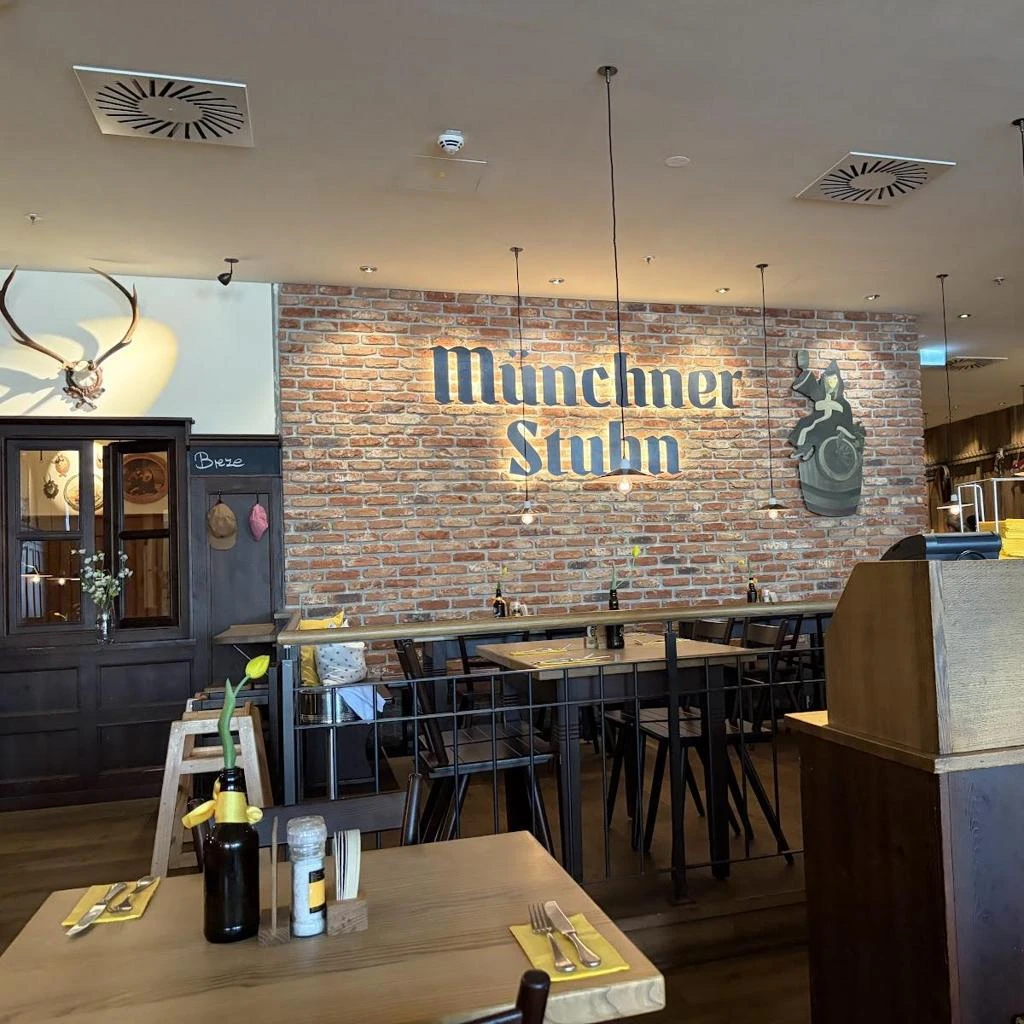
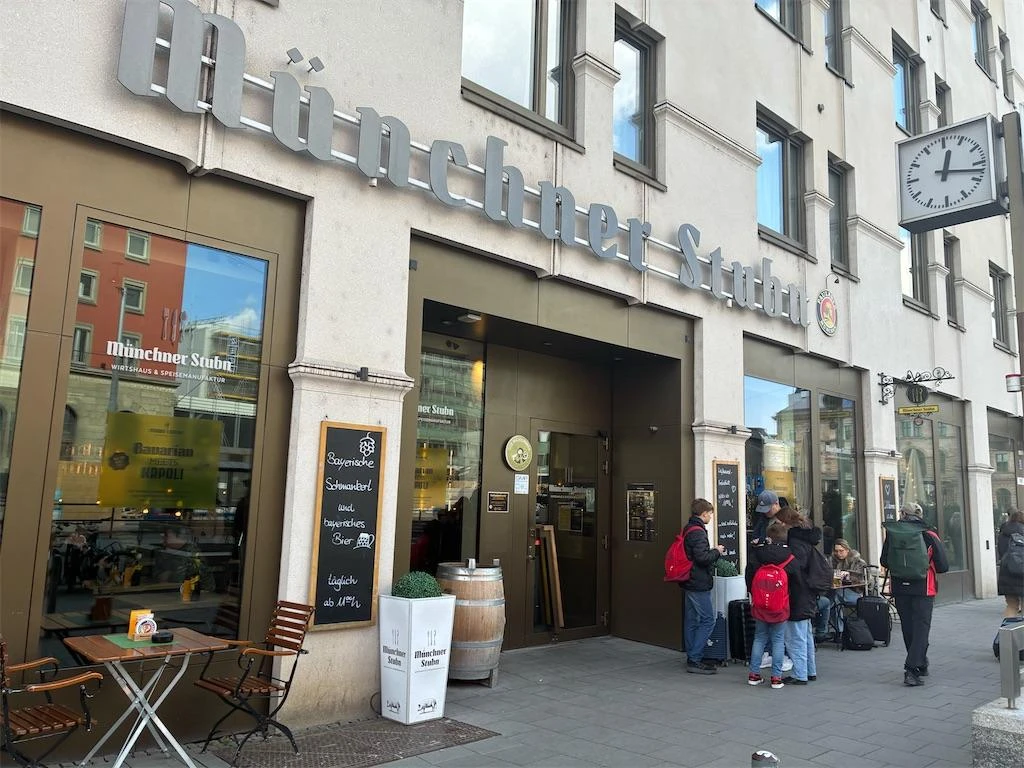
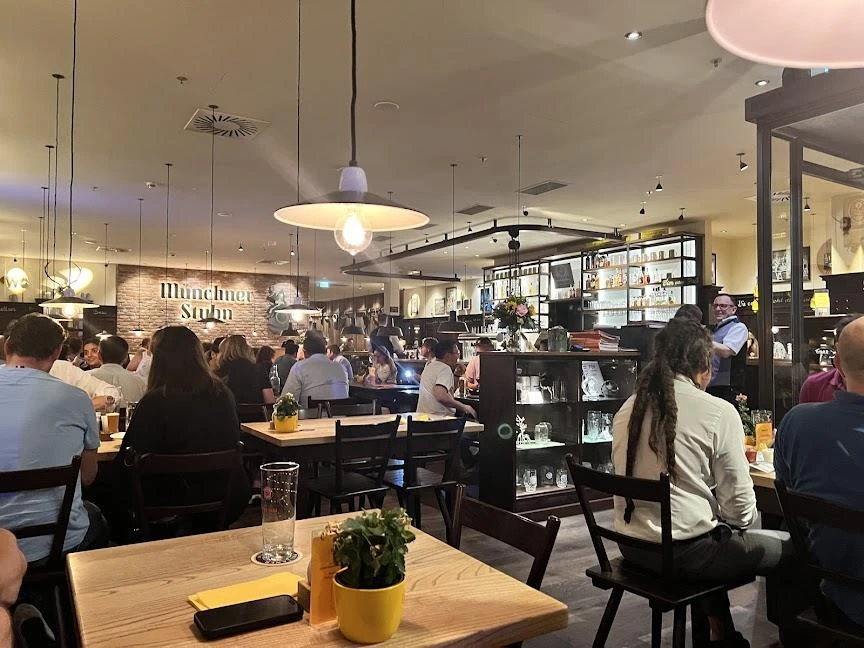
Münchner Stubn offers a more contemporary interpretation of the classic Munich Wirtshaus, making it useful for visitors who want traditional Bavarian food and beer culture without necessarily entering one of the city's monumental historic beer halls. Its setting near Munich's main railway station makes it particularly convenient for travellers arriving or leaving the city, while the interior combines familiar Bavarian elements with a cleaner, more modern restaurant atmosphere. The focus remains firmly on regional food, Munich beer and the convivial Wirtshaus idea. It is a good example of how the city's beer culture continues to evolve while keeping the basic formula of food, beer and communal hospitality intact.
Augustiner-Keller
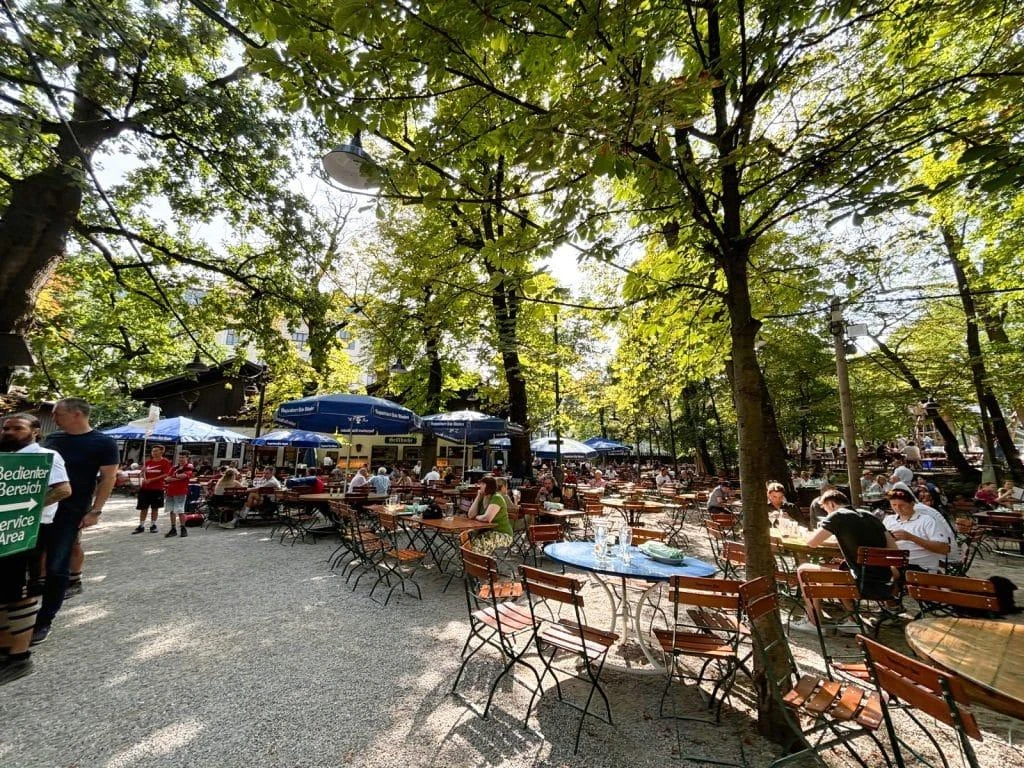
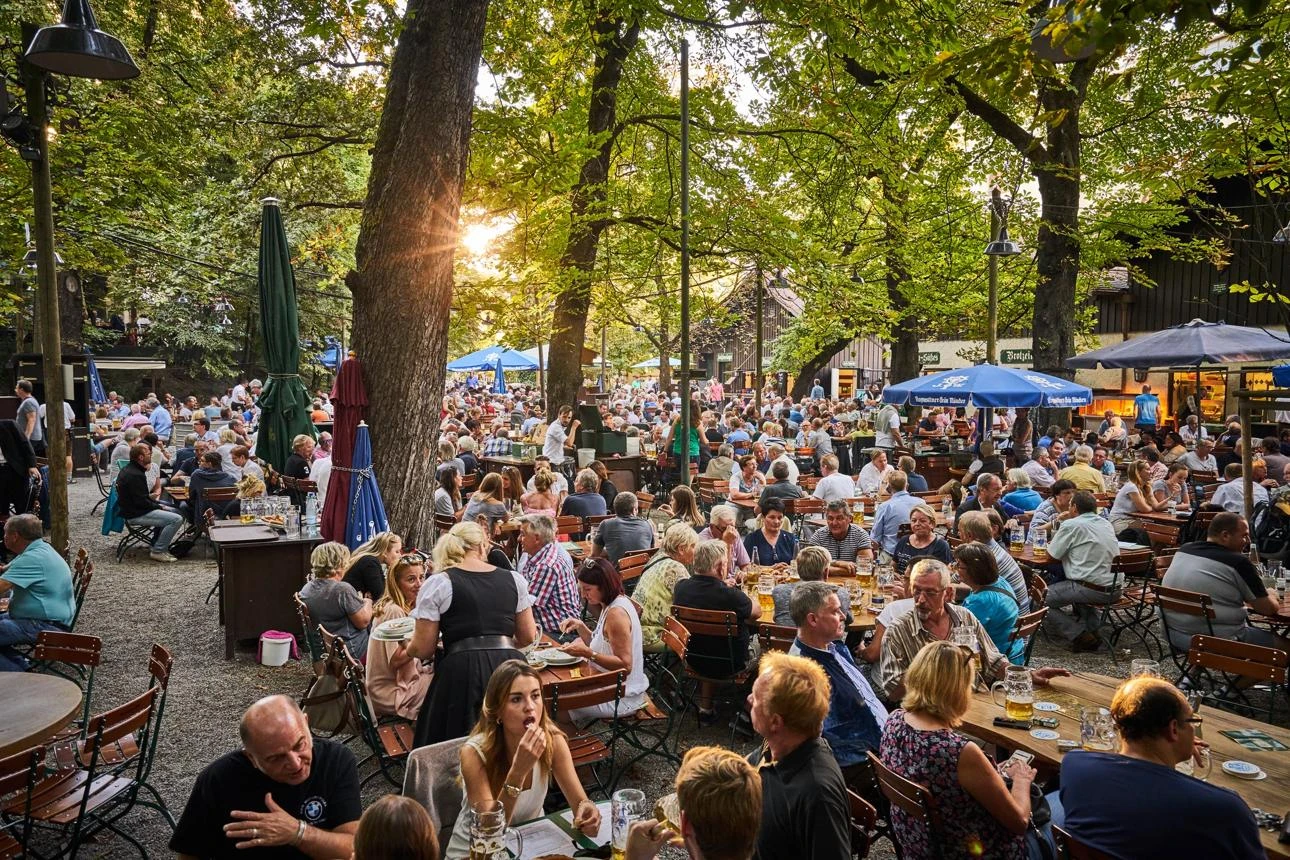
Augustiner-Keller is one of Munich's most important surviving examples of the traditional Biergarten. The site was first recorded as a beer storage facility in 1812, and after regulations changed, beer could be served above the cellars. The familiar garden developed further during the nineteenth century, with chestnut trees providing shade and the large beer garden taking on much of its present appearance in 1896. The site famously retains a self-service area where guests can enjoy the classic beer-garden tradition, while the restaurant and served sections offer a broader Bavarian menu. With its historic cellars, huge chestnut canopy and long communal tables, Augustiner-Keller feels like a living continuation of Munich's beer-cellar culture.
Hirschgarten
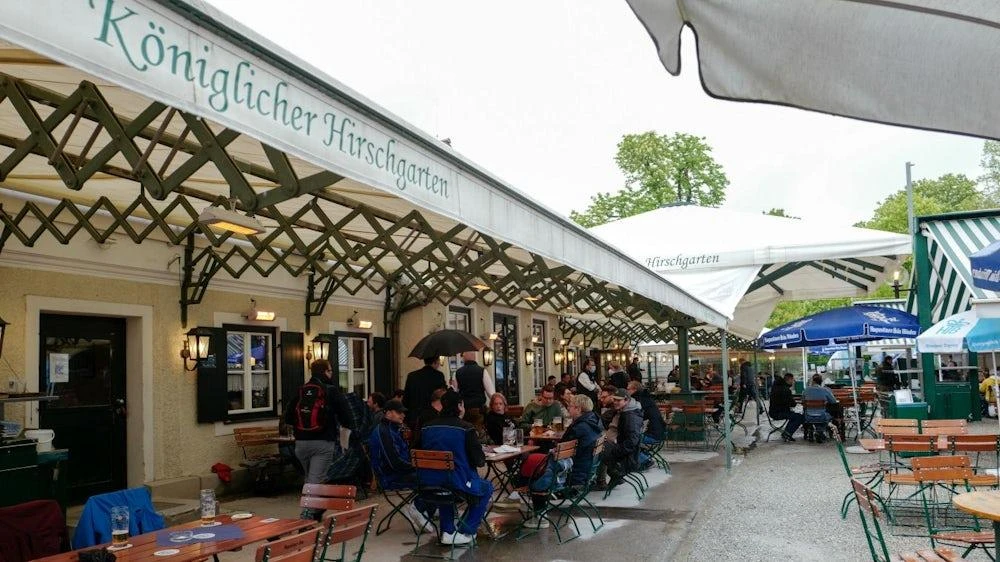
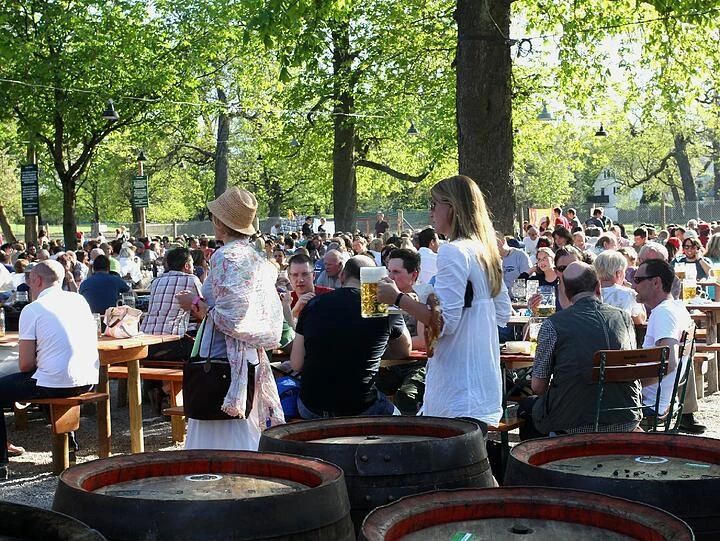
Königlicher Hirschgarten is famous for being one of the world's largest beer gardens, with a spectacular self-service area that can accommodate thousands of people. The restaurant has operated in Nymphenburg since 1791, and the garden sits beside the park's deer enclosure, giving it an unusually spacious and green atmosphere. The combination of mature trees, traditional beer tables, Bavarian food and freshly tapped beer creates the classic Munich Biergarten experience on a monumental scale. Unlike a compact city-centre beer garden, Hirschgarten feels like an excursion into a huge park, making it especially popular during warm summer evenings. The official venue describes the self-service section as having around 7,000 places.
Chinesischer Turm
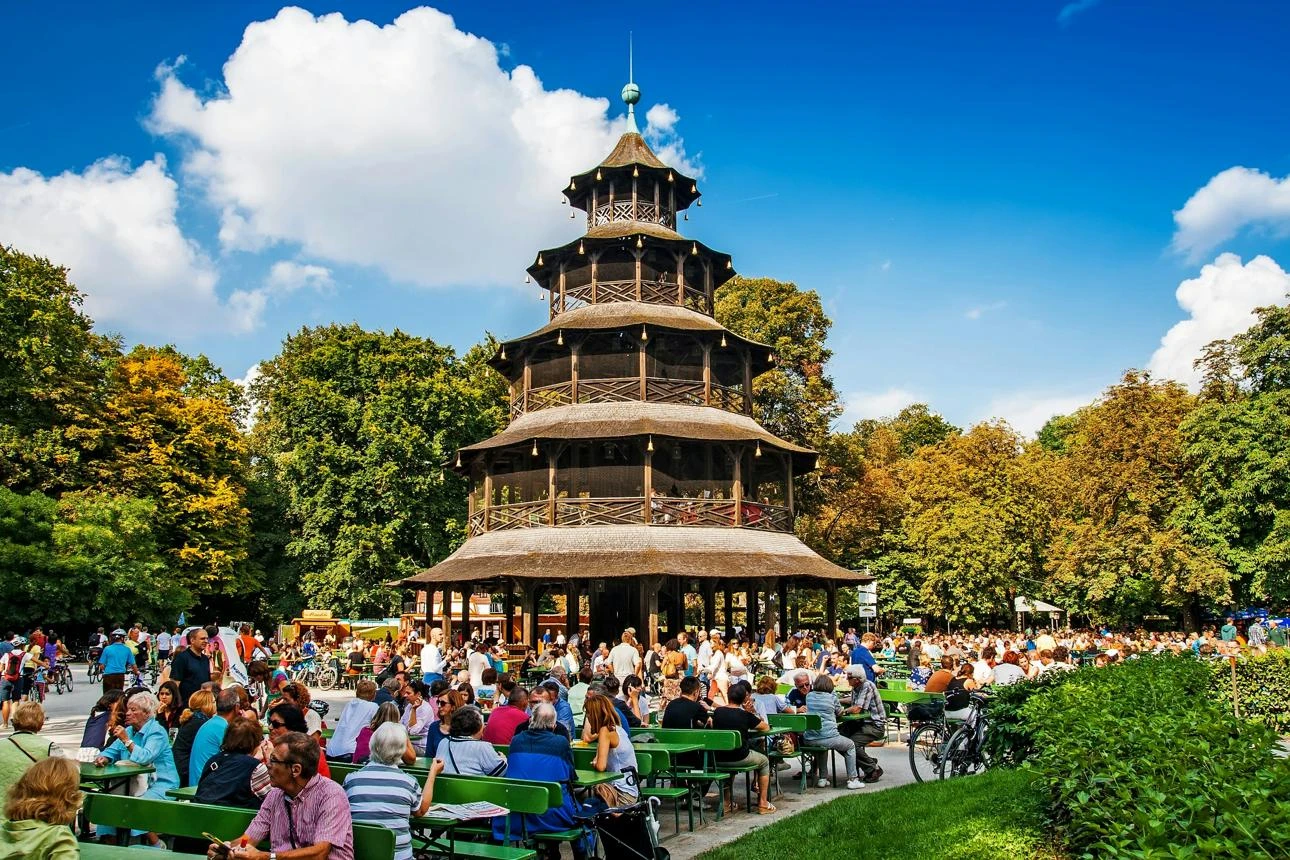
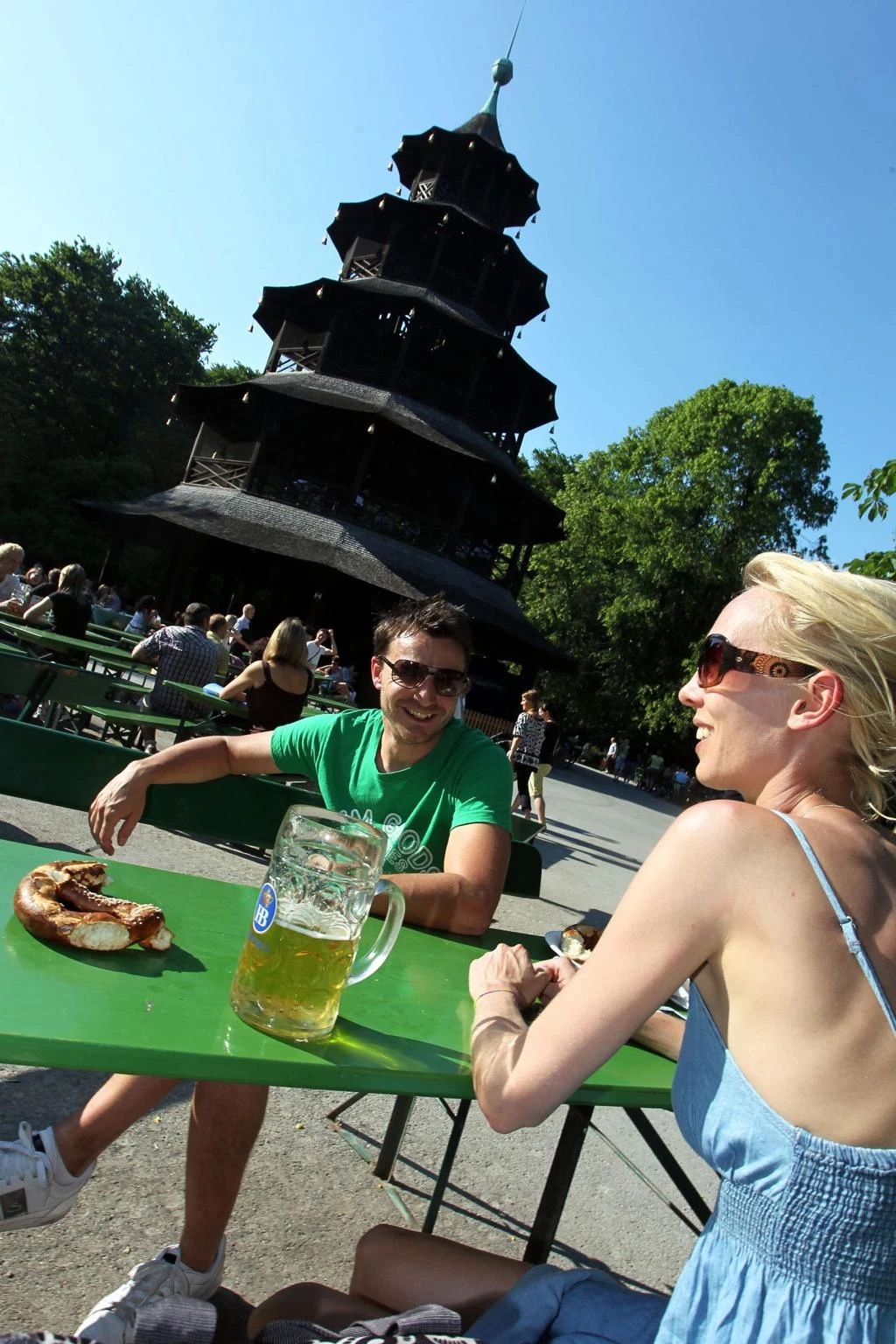
The Biergarten at Chinesischer Turm is one of Munich's most recognizable beer-garden settings because it sits inside the English Garden beneath the park's famous Chinese Tower. The tower itself dates to the late eighteenth century and became one of the visual symbols of the park, while the surrounding beer garden developed into a major social gathering place. The setting is what makes the experience special: instead of being surrounded by city streets, visitors drink beer beneath trees in one of Europe's great urban parks. Traditional Bavarian food, communal wooden tables and brass-band performances create the atmosphere many visitors imagine when they first think of a Munich Biergarten.
Viktualienmarkt
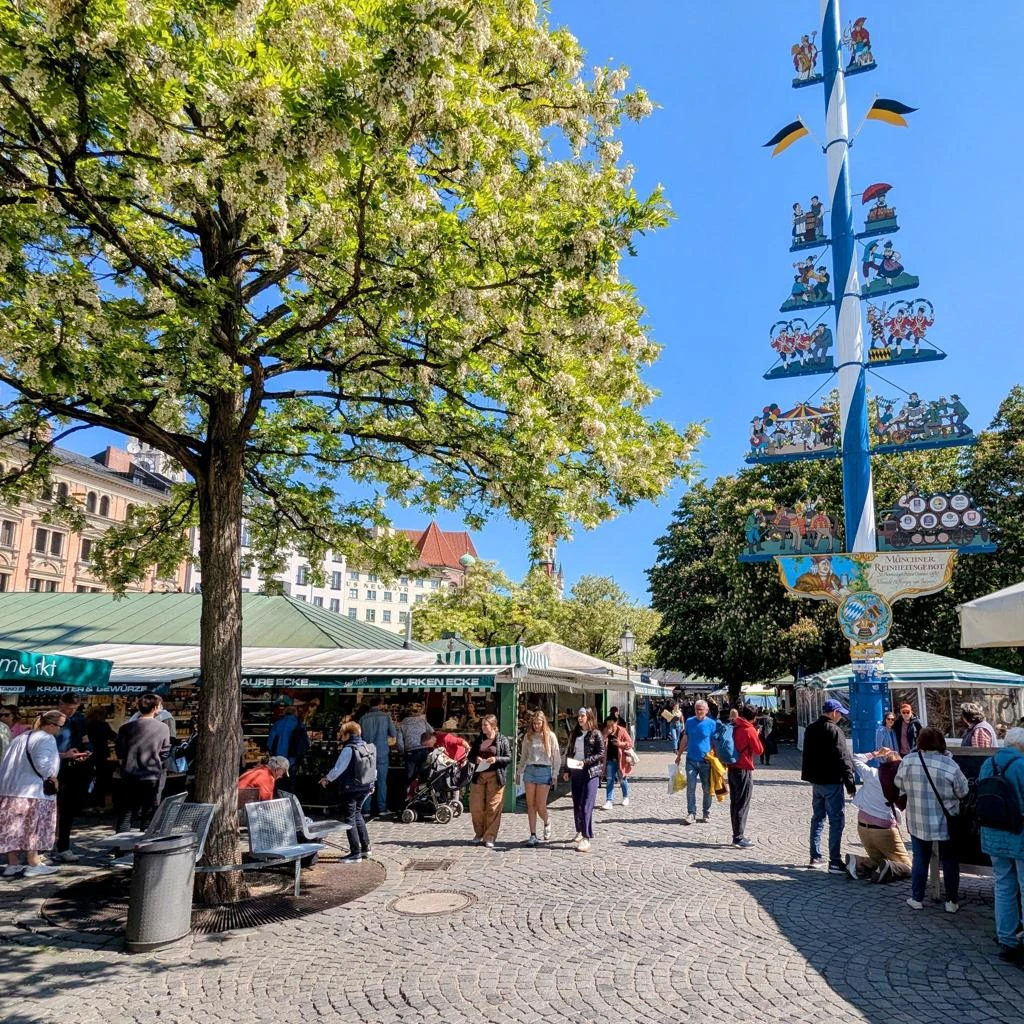
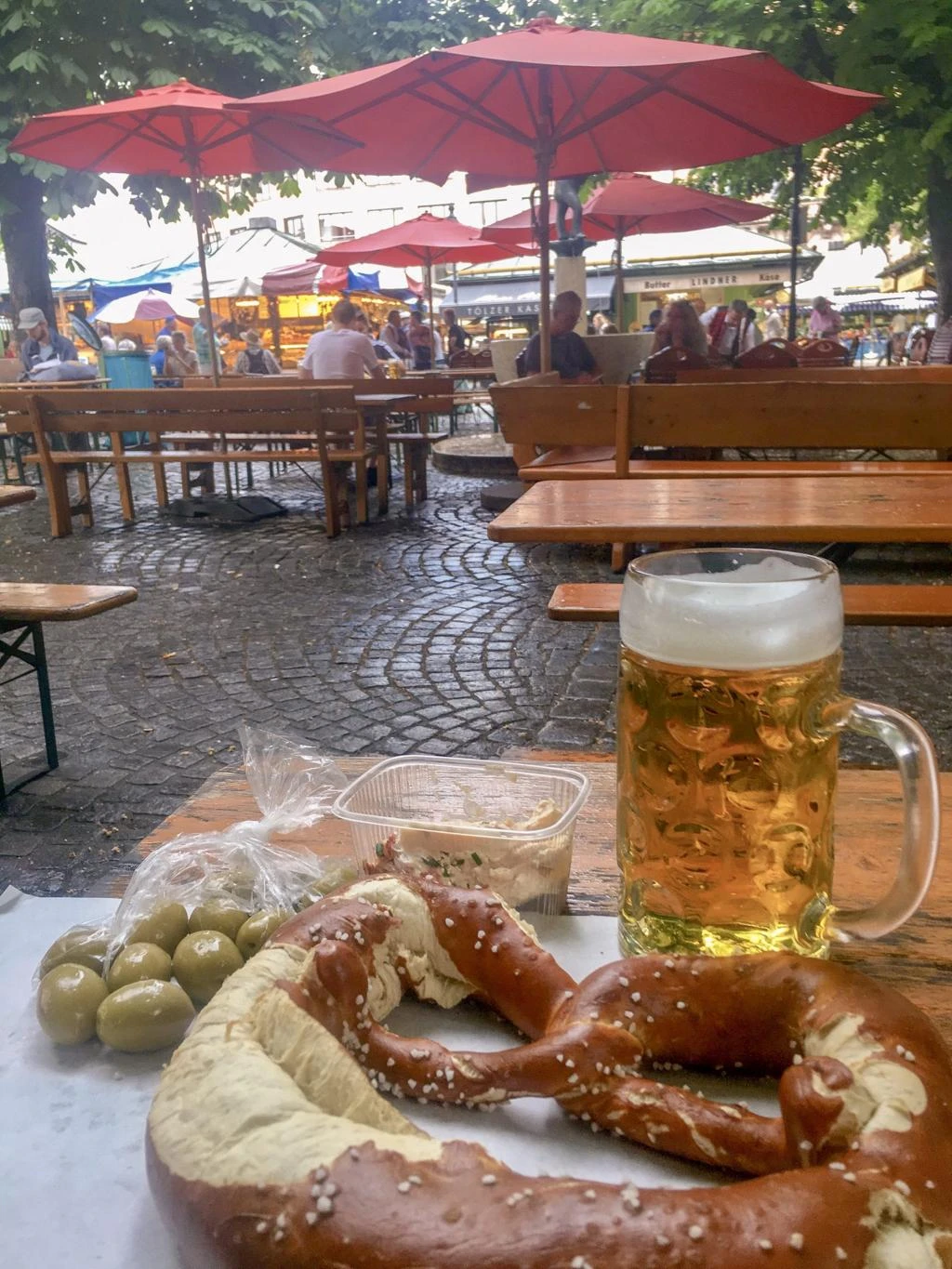
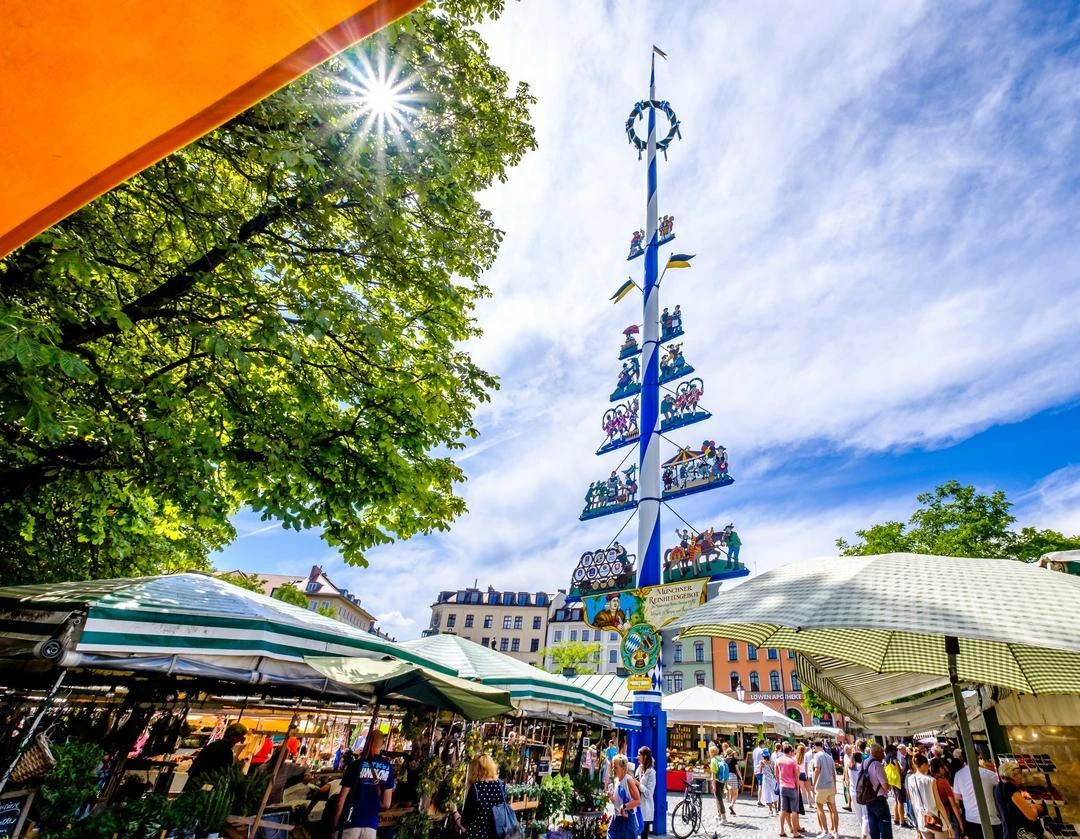
Viktualienmarkt is primarily Munich's historic food market, but its central Biergarten makes it an important part of the city's drinking culture. The unusual feature here is that the beer selection changes between Munich breweries rather than being permanently tied to one brewery. That makes the market a useful place to experience the rivalry and variety of Munich's brewing tradition in one location. Surrounded by food stalls selling cheese, meat, fruit, bread, flowers and regional specialities, the beer garden also demonstrates how beer functions in Munich as part of a broader food culture. The setting beside the traditional maypole and market stalls makes it one of the most atmospheric places for a casual beer in the city centre.
Nockherberg Biergarten
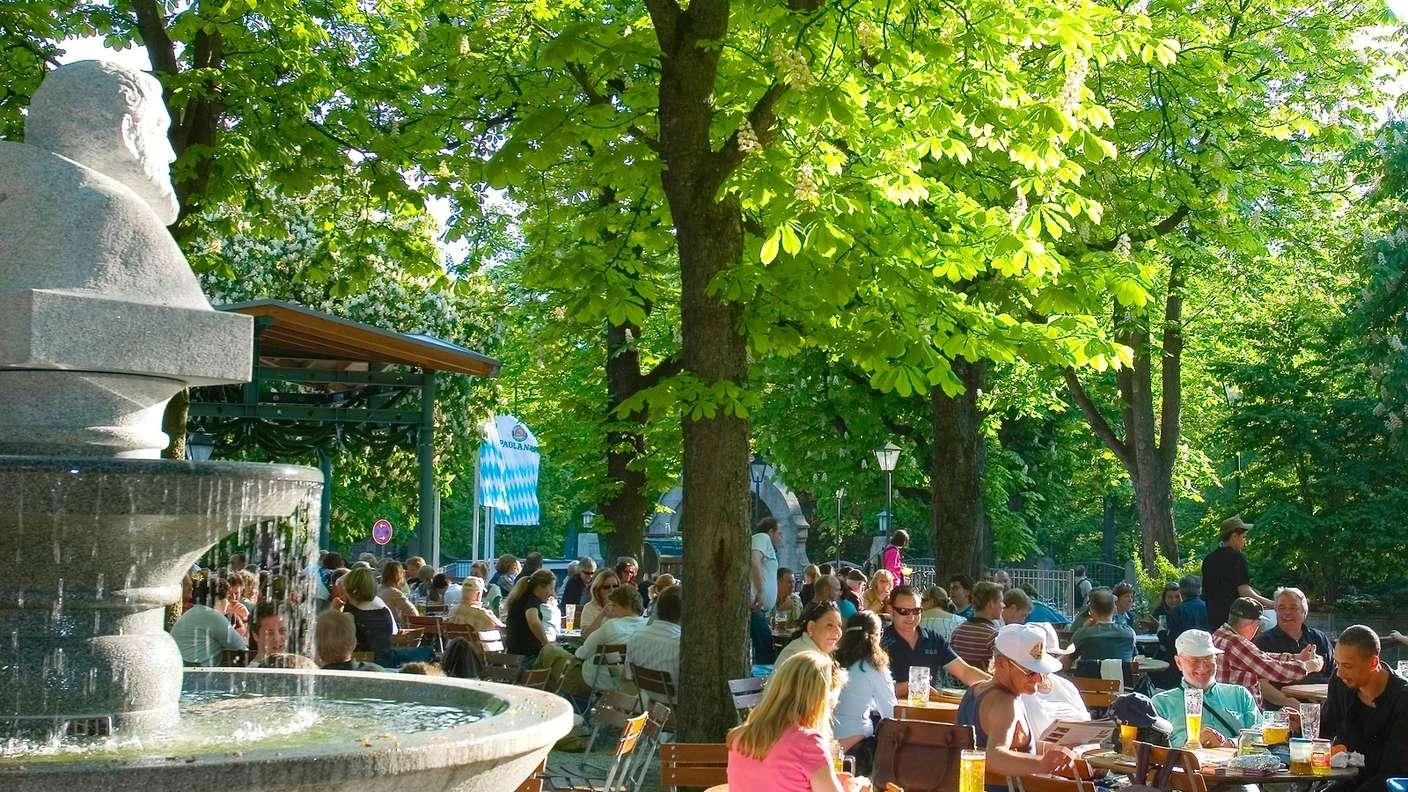
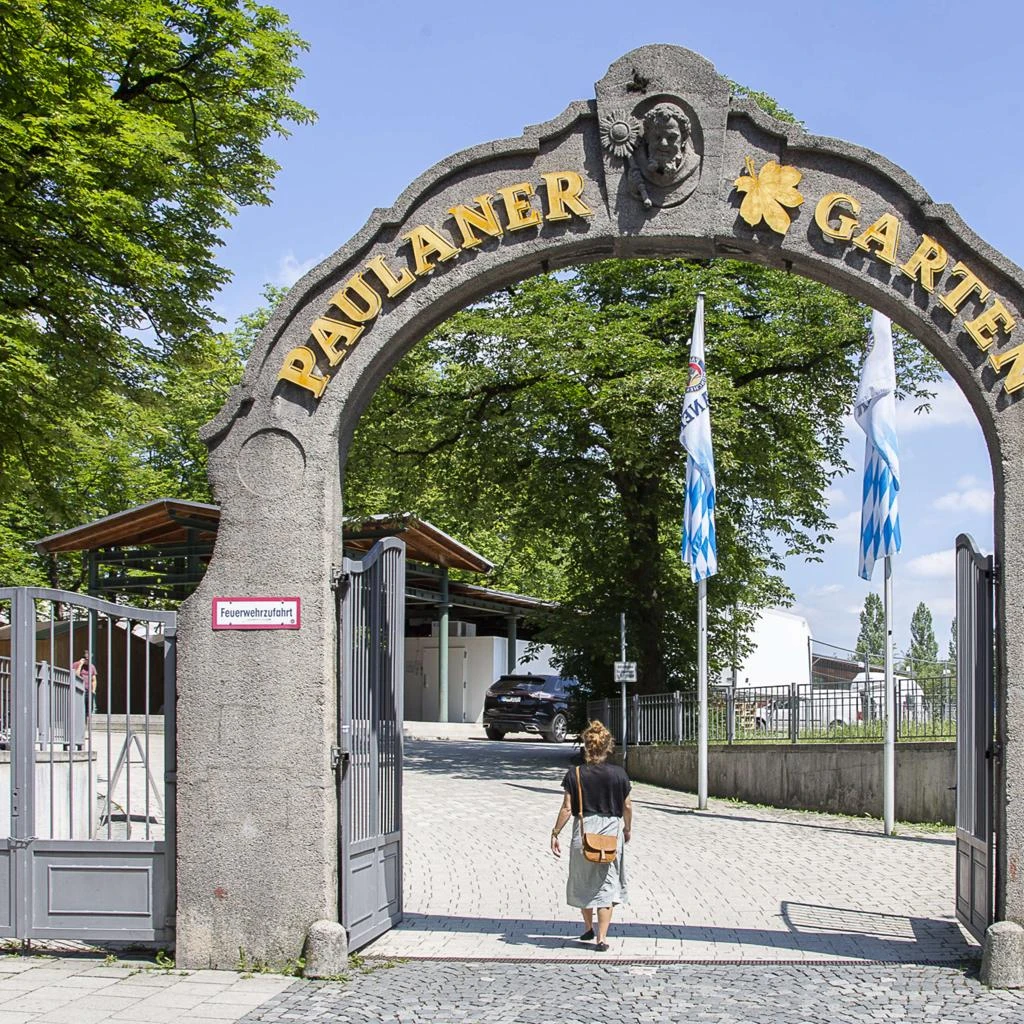
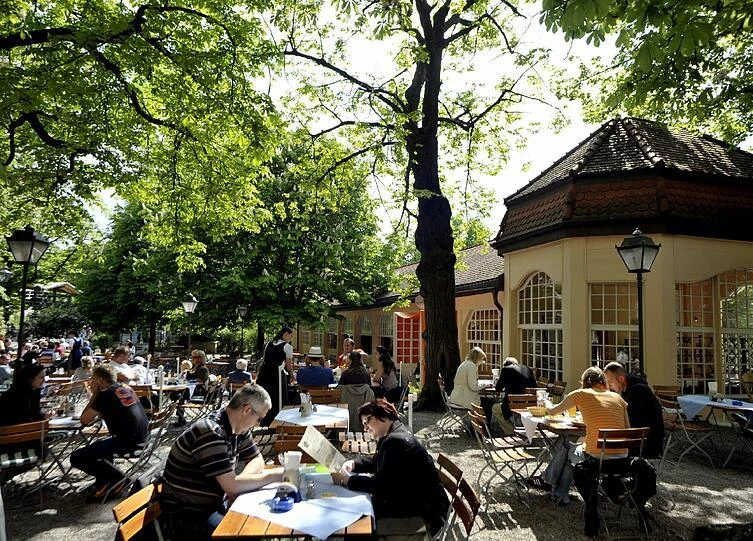
The Nockherberg Biergarten is closely associated with Paulaner and the strong-beer traditions that developed around the brewery on the hill above the Au district. Its history is particularly connected with Starkbierfest, a Munich celebration centred on stronger seasonal beers and one of the city's major traditional brewery events outside Oktoberfest. During summer, the garden becomes a classic Munich setting of chestnut trees, long wooden tables, Bavarian dishes and freshly poured beer. Its elevated position also gives the area a slightly different character from the beer gardens directly in the centre. For visitors interested in the seasonal side of Munich brewing, Nockherberg offers an important connection between everyday Biergarten culture and festival brewing.
Taxisgarten
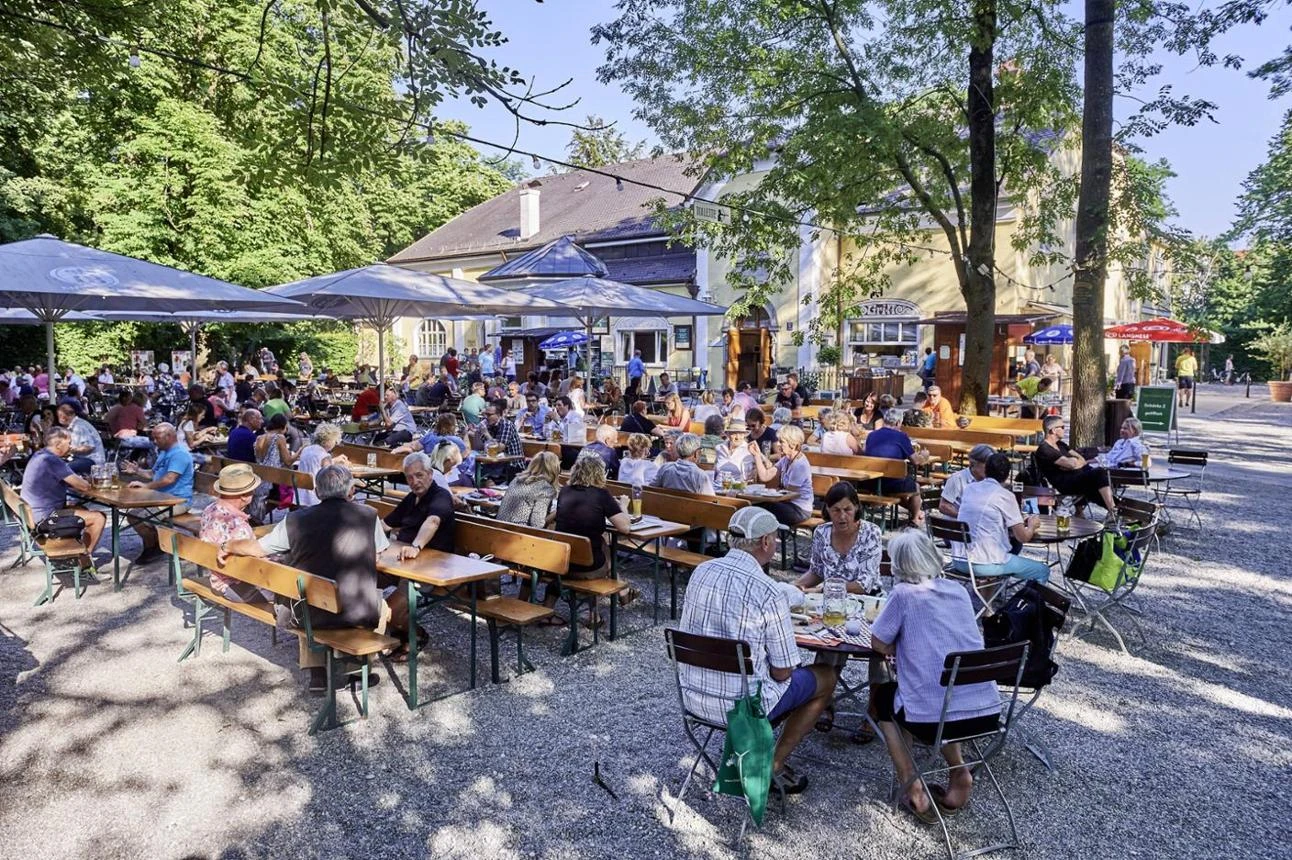
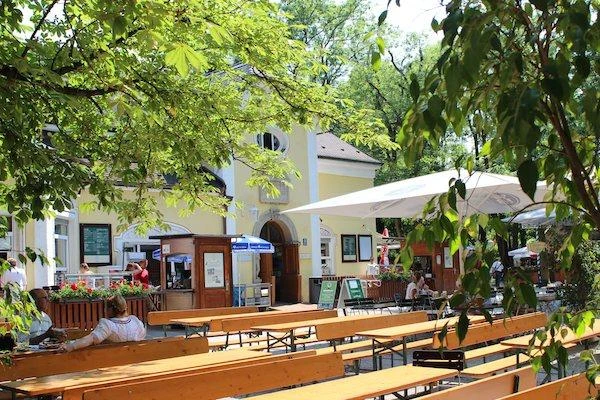
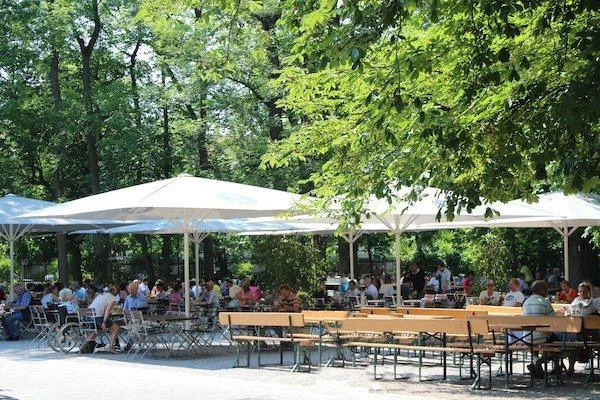
Taxisgarten is a traditional neighbourhood Biergarten in Neuhausen-Nymphenburg that feels more local and relaxed than some of Munich's giant tourist landmarks. The garden sits beneath mature chestnut trees and has space for more than 1,000 guests, creating the familiar Munich combination of shade, wooden tables and freshly tapped beer. Its menu focuses on Bavarian classics such as roast chicken, Obazda and other Wirtshaus dishes, while vegetarian and vegan options are also available. The current garden serves Hofbräu München beer, making it a good example of how a traditional neighbourhood Biergarten continues to function as an everyday social space rather than simply a sightseeing attraction.
Seehaus
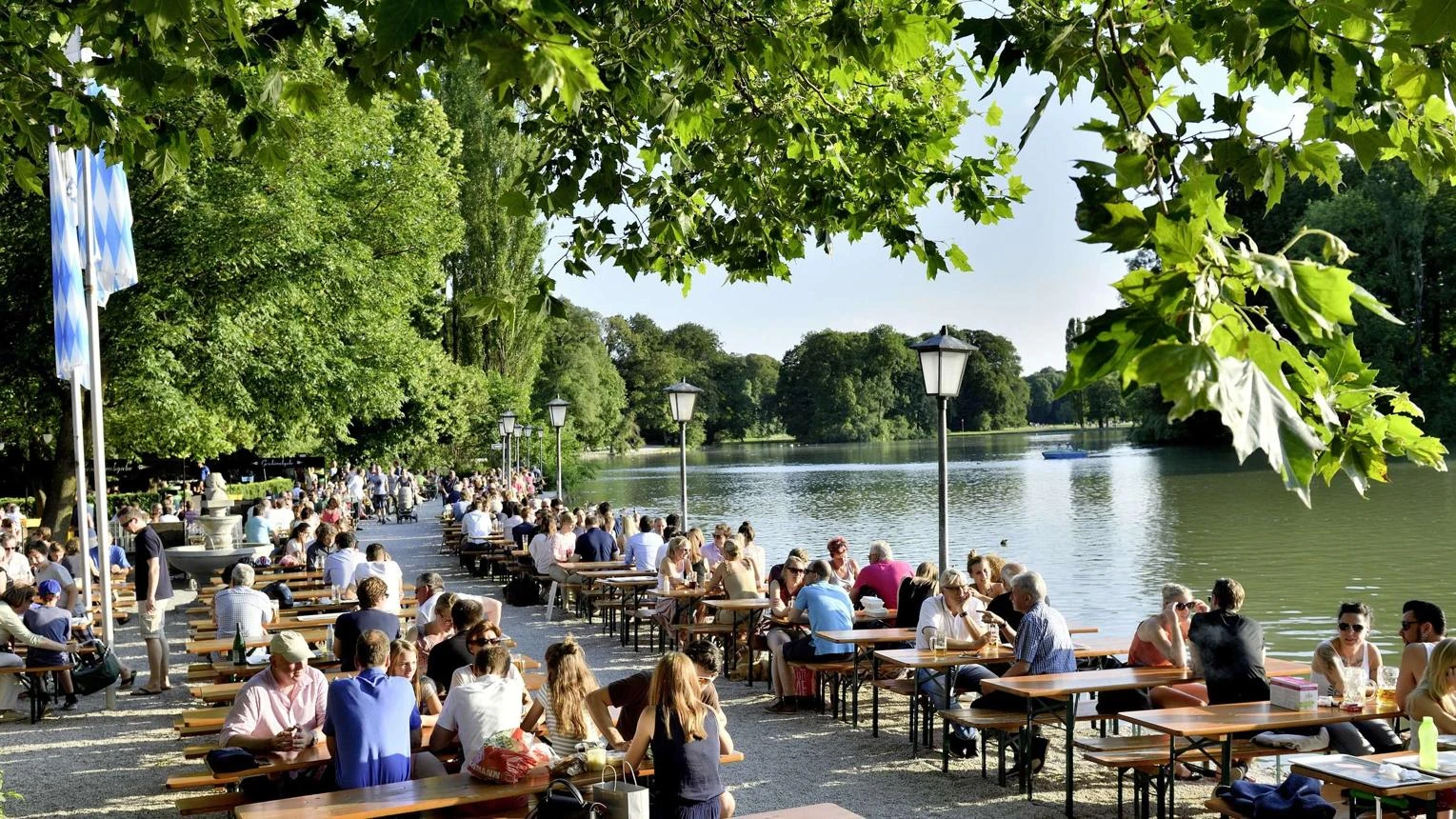
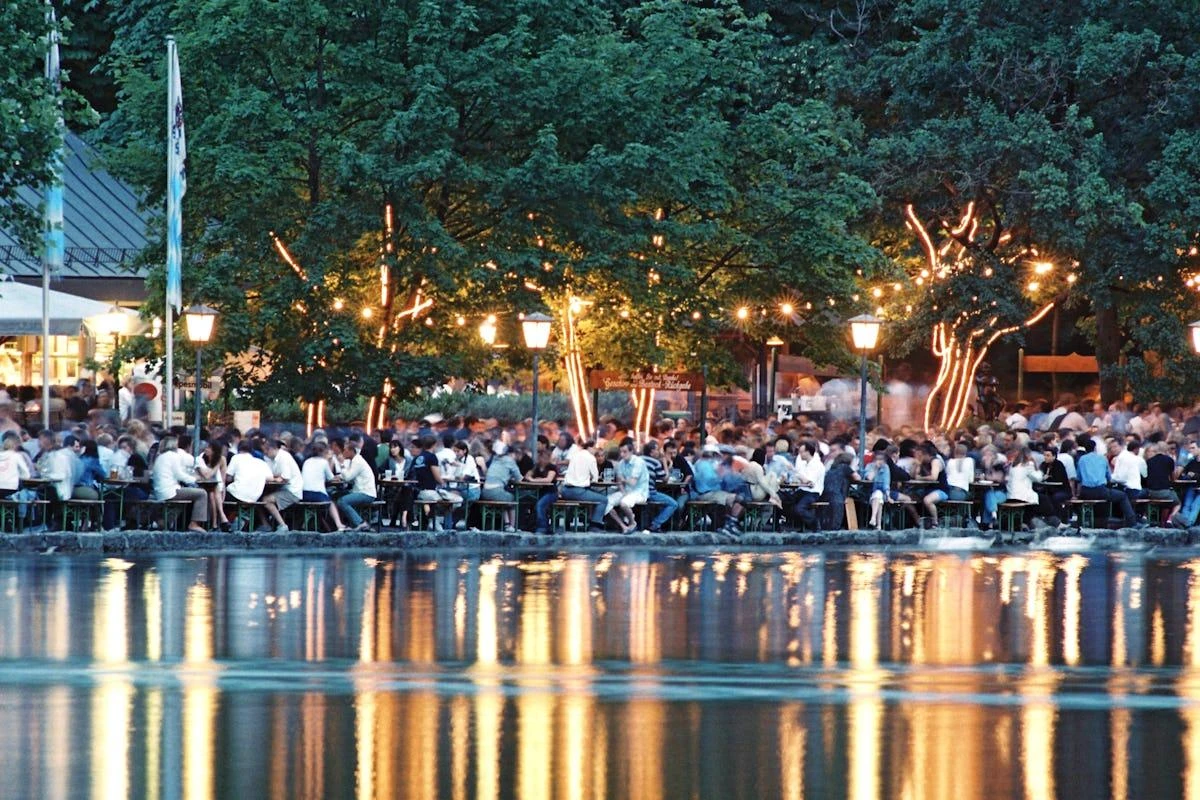
Seehaus has one of the most attractive natural settings among Munich's classic beer gardens because it sits beside Kleinhesseloher See in the English Garden. Instead of simply looking into a park, visitors have water, trees and boats forming the background behind the beer garden. This makes the place particularly atmospheric on warm afternoons and long summer evenings. The combination of lakeside scenery, Bavarian food and beer creates a slower experience than the large central beer halls. It is also a good illustration of how Munich's beer culture is closely connected with public parks and outdoor recreation: a beer garden here becomes part of a much larger landscape of walking paths, water and greenery.
Aumeister
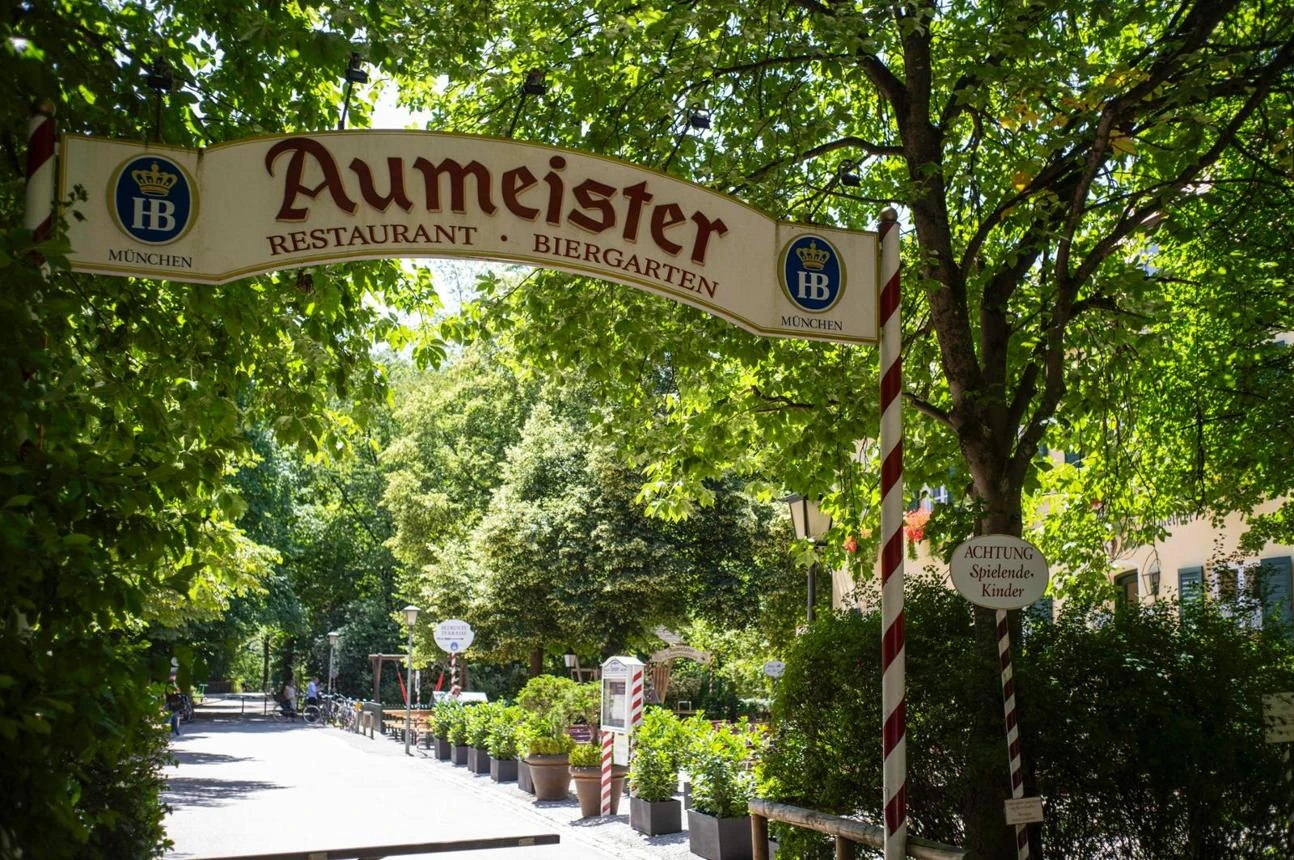
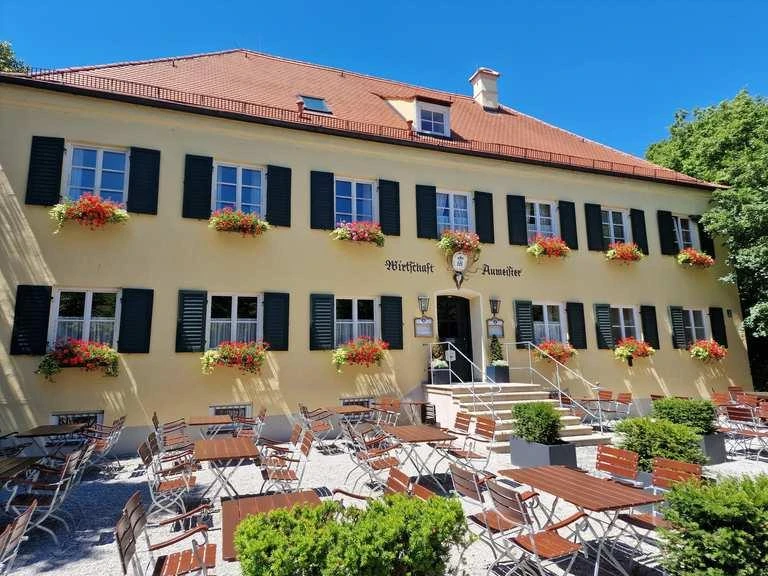
Aumeister lies at the northern end of the English Garden and offers a quieter alternative to the better-known beer gardens closer to the city centre. The historic restaurant and beer garden developed from a former hunting and forestry setting, and its position among trees gives the place a distinctly rural feeling despite being inside Munich. The beer garden follows the familiar Bavarian formula of communal tables, shade and traditional food, while the surrounding paths make it easy to combine a visit with a long walk through the English Garden. Aumeister is particularly appealing to visitors who want to experience Munich's Biergarten tradition as part of a green escape rather than as a stop between central-city attractions.
Waldwirtschaft
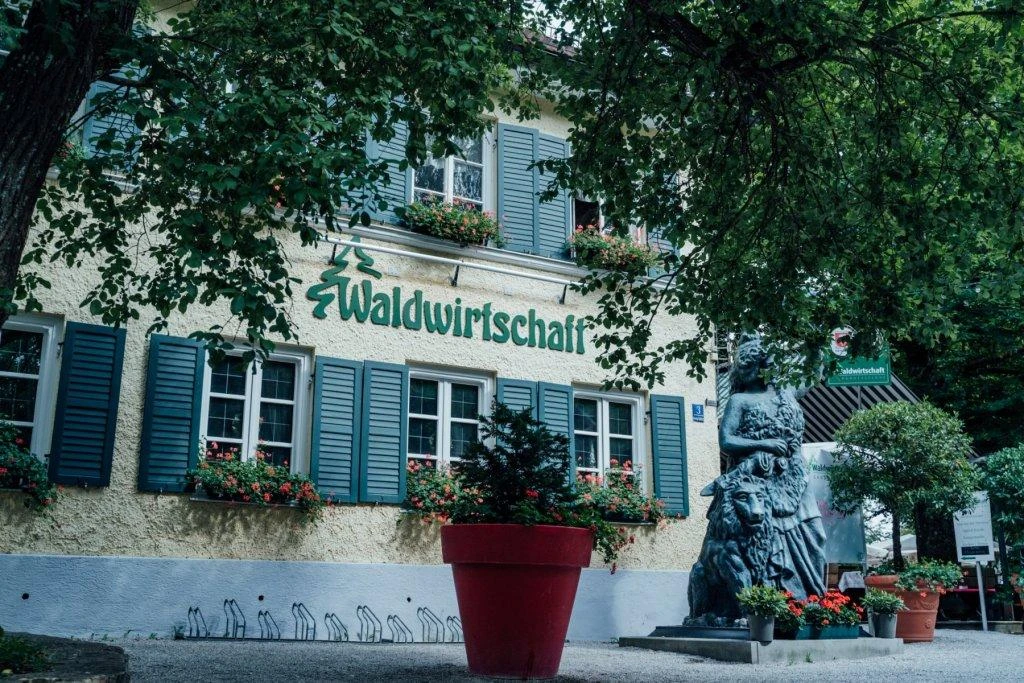
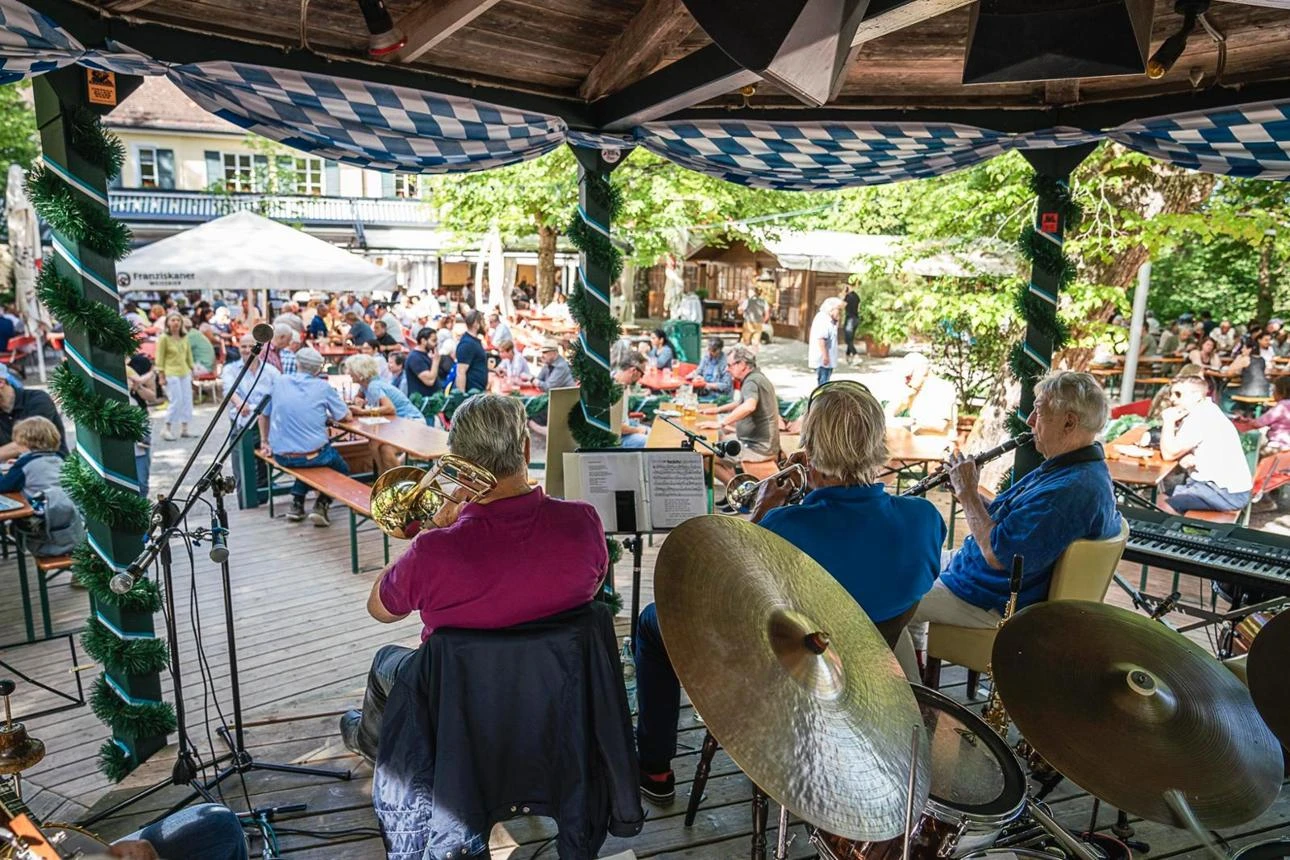
Waldwirtschaft, often called WaWi, offers a different side of Munich beer culture by combining a traditional Biergarten with the wooded landscape around the Isar. Located south of the city centre in Grosshesselohe, it feels more like a countryside destination than an urban restaurant. Mature trees provide the classic shade associated with Bavarian beer gardens, while the spacious grounds and nearby walking routes make the journey part of the experience. The restaurant is also known for its traditional Bavarian atmosphere and live music events, reinforcing the idea that Munich's beer gardens are social places rather than simply outdoor tables. It is especially attractive on warm days when visitors want beer, food and greenery in equal measure.
Giesinger Bräu
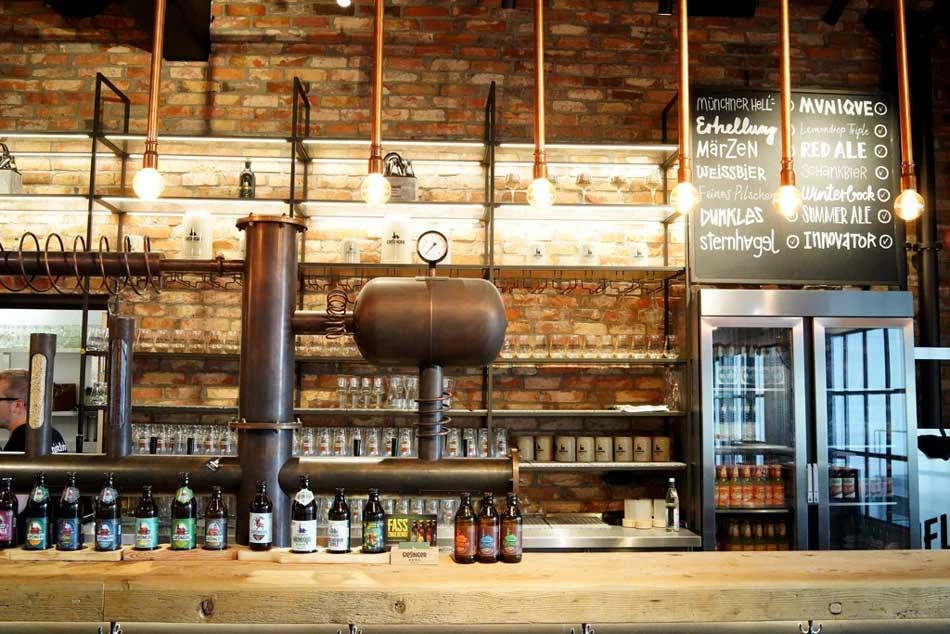
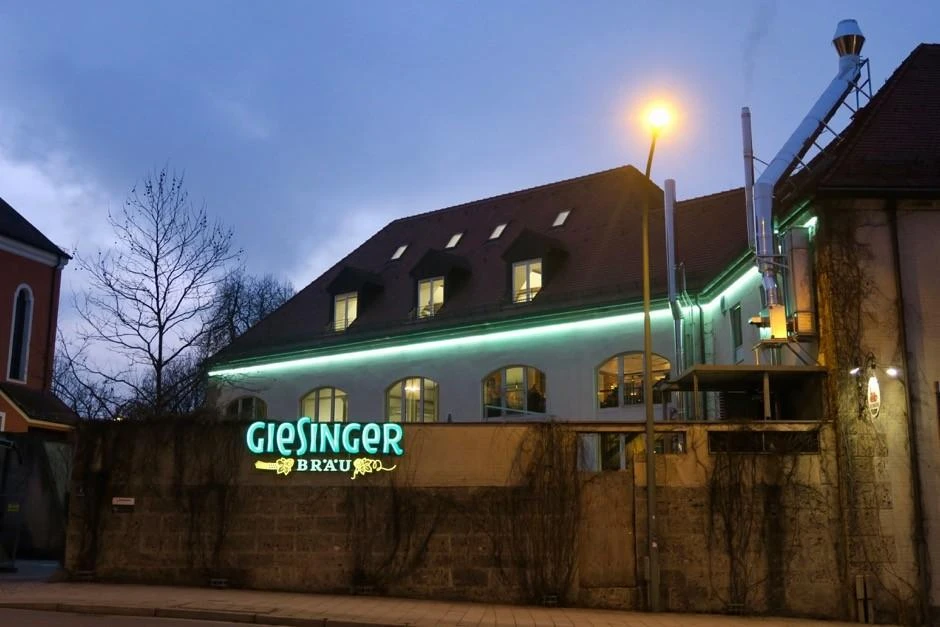
Giesinger Bräu is the clearest example of Munich's modern brewing revival. The brewery began in 2006 in a small garage in Giesing, where founders Steffen Marx and brewmaster Tobias Weber started experimenting with their own beers. In 2008 it became Munich's first new brewery founded in decades, and the operation later moved into a former electrical substation on Martin-Luther-Straße. Giesinger combines traditional Munich styles such as Helles, Weißbier, Dunkel, Märzen and Bock with a small craft-beer range and modern brewing ideas. The brewery also revived the city's old Stehausschank tradition, creating casual standing bars where locals can stop for a quick beer.
BrewsLi
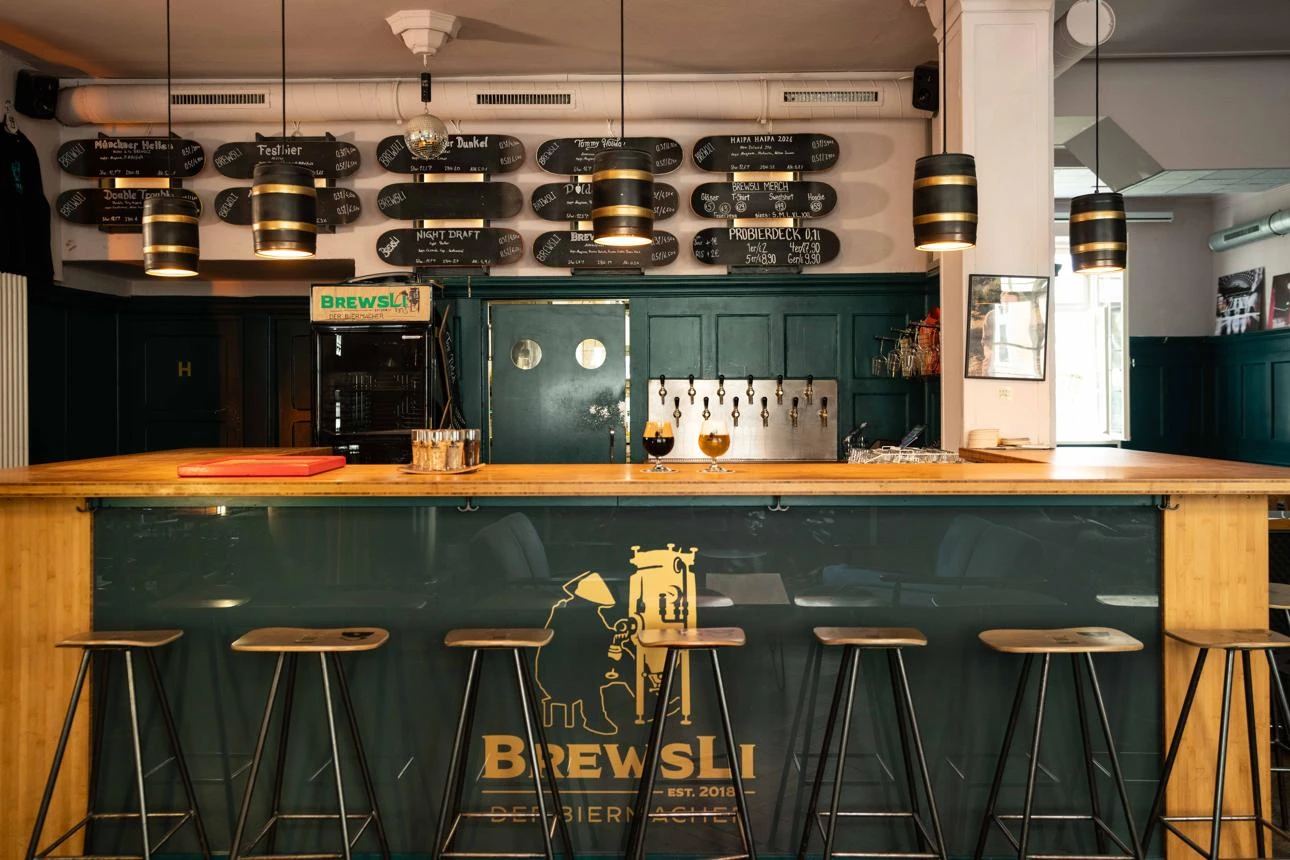
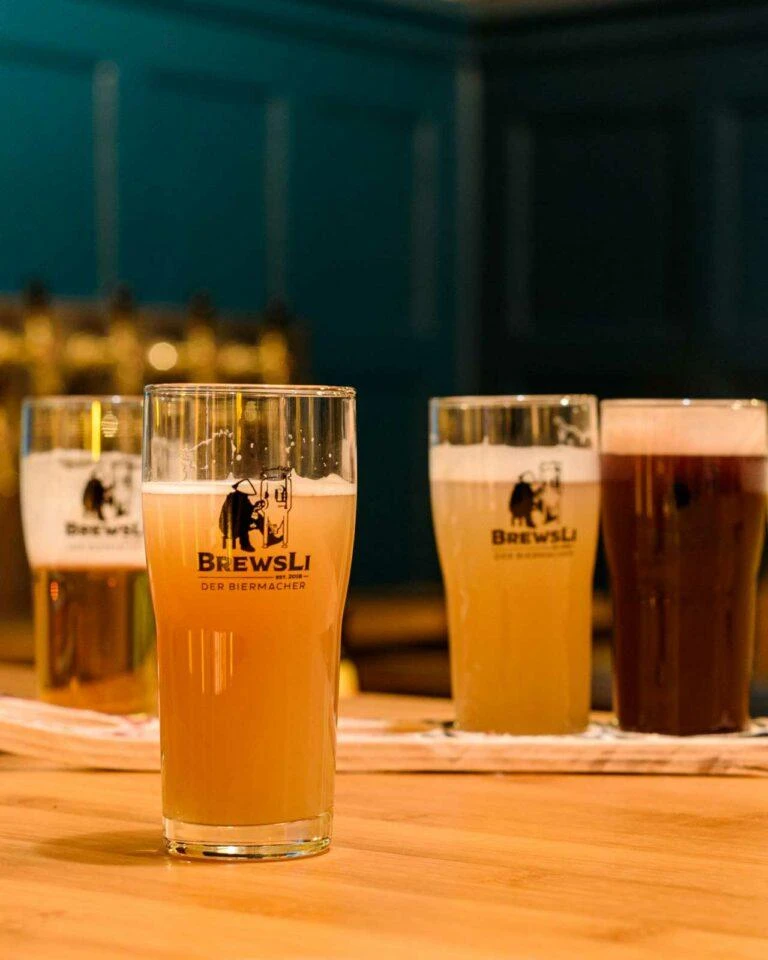
BrewsLi represents the international and experimental side of Munich's modern beer scene. Instead of focusing exclusively on the classic local formula of Helles and Weißbier, craft-beer bars such as this provide a broader selection of styles from Munich, Germany and beyond. That makes the experience fundamentally different from a traditional Wirtshaus: the emphasis shifts toward variety, individual breweries, unusual recipes and discovering beers that may not appear in a conventional Bavarian beer hall. For visitors interested in seeing how Munich's drinking culture is changing, a modern craft-beer bar offers useful context. It shows that the city's historic beer identity now exists alongside a younger culture of independent brewing and international beer styles.
Tap-House
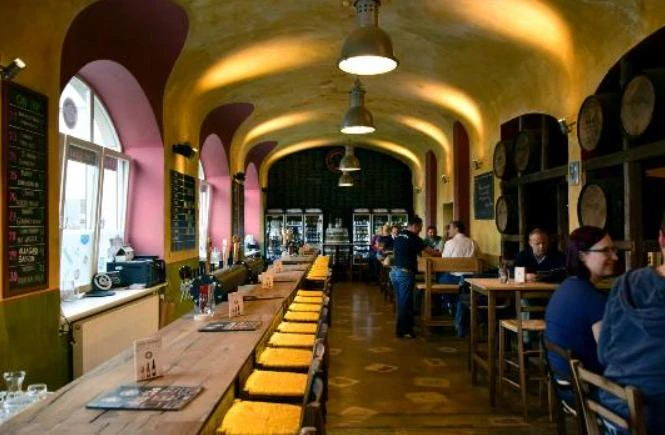
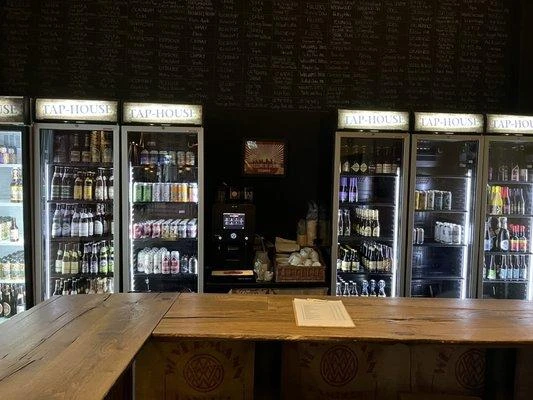
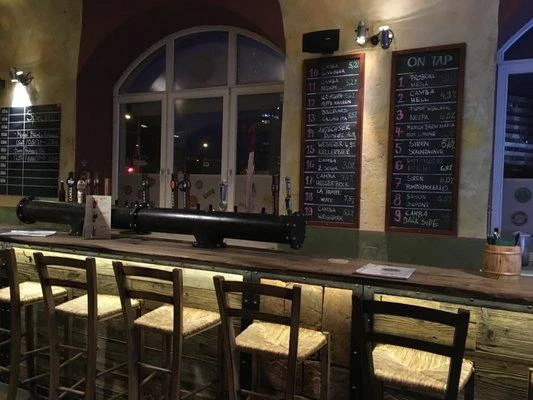
Tap-House is one of the places that demonstrates how far Munich's beer scene has expanded beyond its traditional breweries. The concept centres on a large rotating selection of beers served directly from taps, allowing visitors to explore styles that are rarely represented in classic Munich beer halls. Instead of ordering the same local lager throughout the evening, guests can compare IPAs, stouts, sour beers, wheat beers and other modern styles from different breweries. The atmosphere is correspondingly more contemporary and beer-focused, making Tap-House particularly useful for travellers who already know Bavarian beer and want to see the craft movement that has developed alongside it.
Schiller-Bräu
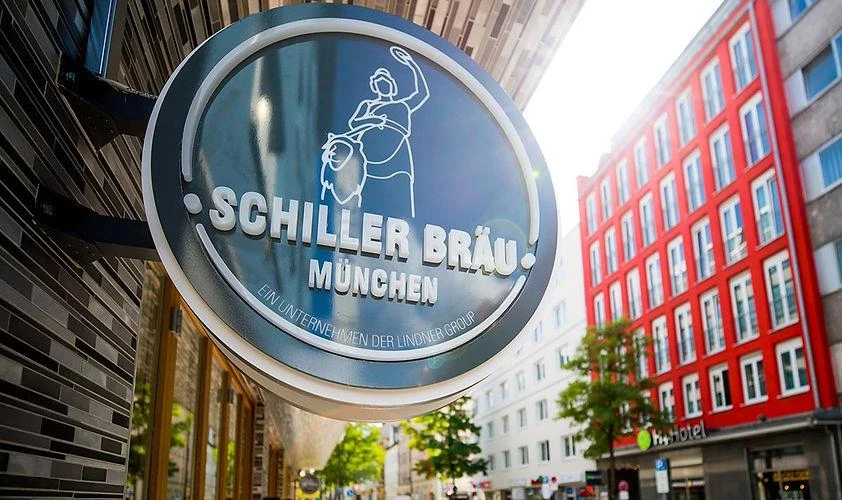
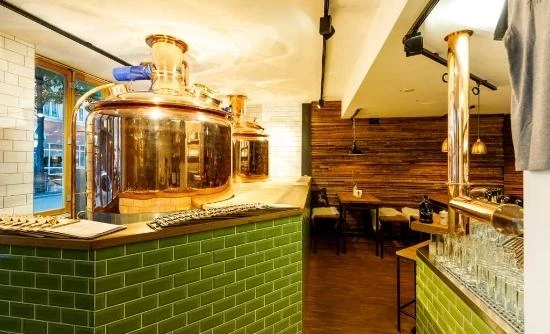
Schiller-Bräu is a useful final stop because it sits between Munich's traditional Wirtshaus culture and its newer independent brewing movement. Rather than presenting beer purely as a historic institution, the brewery combines its own production with a restaurant atmosphere and a more contemporary approach to brewing. That makes it interesting for visitors who want to understand what Munich beer culture looks like today, after centuries of monastery breweries, royal brewing houses and giant Biergärten. The experience is smaller and more personal than the famous tourist beer halls, allowing the brewing process and individual beers to become part of the story. It is a good reminder that Munich's beer tradition continues to evolve rather than simply repeat its past.